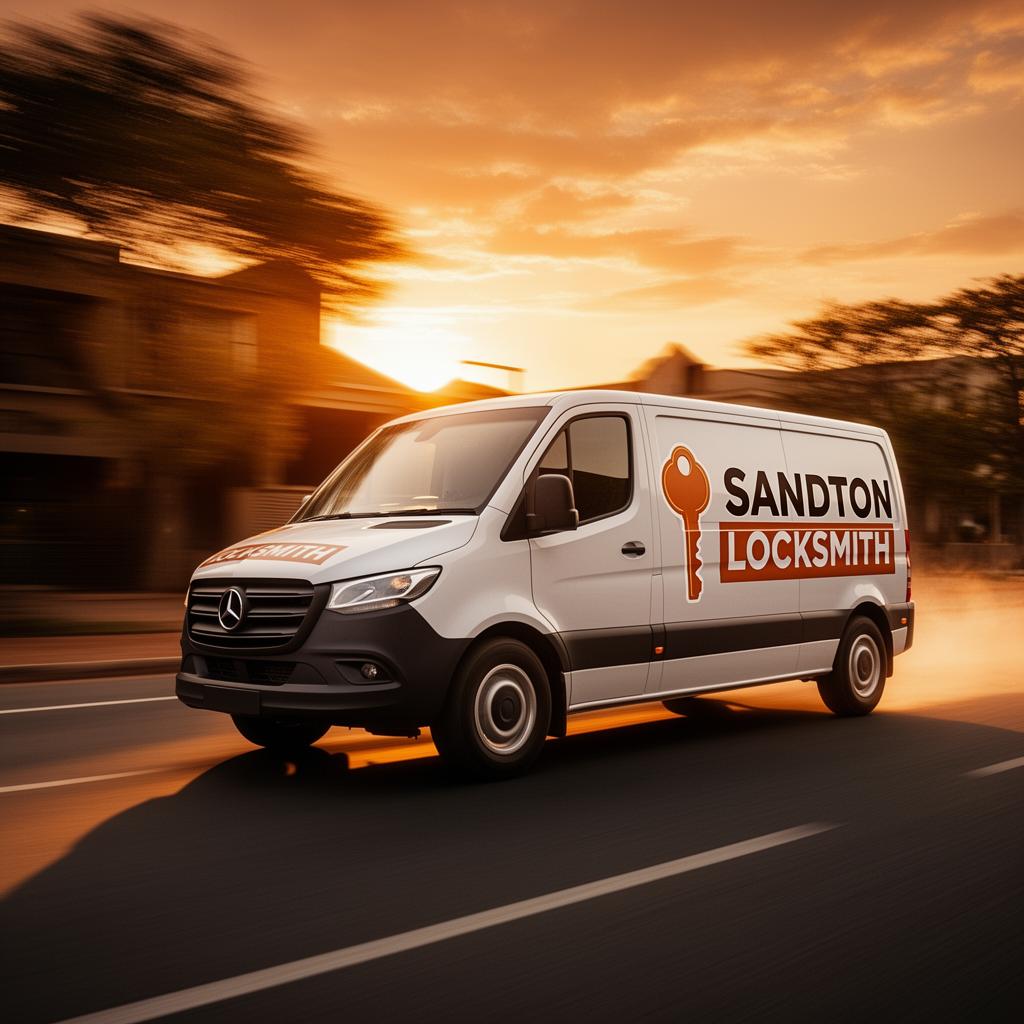
Response-Time Claims Are the Least Reliable Thing in This Trade
Response-time claims are the least reliable thing in this trade. They are easy to publish, impossible to verify in advance, and almost never stated with the assumptions attached. Ours is twenty to thirty minutes as a typical working range, and this article exists to say exactly what that includes and what it does not — the same way our emergency locksmith process is set out publicly rather than left to be discovered.
The short version: the travel is the predictable part. Everything else is not, and in this area everything else is usually larger than the travel.
This article covers what a realistic window is built from, the four things that genuinely extend it, and what a promise you should not accept sounds like.
Need somebody now?
Call and say where you are and what stands between the road and the door. Both change the honest answer to how long.
What the Number Is Actually Measuring
Twenty to thirty minutes is travel time from the nearest available technician to your address, under normal conditions. That is what it measures and it is worth being precise about the assumptions inside it.
It assumes a technician is available rather than mid-job. It assumes normal traffic for the time of day. And it assumes that arriving at your address is the same thing as arriving at your door, which in a great deal of Sandton it is not.
That last assumption is the one that breaks most often. A boom, a guardhouse, a complex gate or an apartment lobby can add more time than the entire drive, and none of it is under the technician's control — which our locksmith for home lockout page covers in detail.
So a number without the assumptions attached is close to meaningless. Ours is published with them, and any 24 hour locksmith in Sandton claim you read elsewhere is worth reading the same way.
The Four Things That Genuinely Extend It
In rough order of how much time each one adds.
Access. By a wide margin the largest factor. A technician who is not expected at a boom, a guardhouse or a lobby waits while somebody is found, phoned and satisfied, and that can exceed the drive several times over.
Being unreachable. The commonest failure inside the access problem: the phone used to confirm the technician is inside the locked house or car. Borrowing a phone or walking to the gate solves it in a minute, and our car lockout in Sandton calls hit this constantly.
The job being different from the description. A lockout described that turns out to be a forced door needs different equipment, which is why our locksmith for lock change in Sandton calls always ask for the symptom rather than the requested fix. And genuine simultaneous demand — weekend evenings and public holidays produce clusters, and honest dispatch says so rather than pretending otherwise.
What Adds Time, and Roughly How Much
Six factors, all of them ordinary and most of them avoidable.
Not being expected at a gate
The largest single factor. Frequently longer than the entire drive, and solved by one sentence on the call.
The phone locked inside
Very common. The guardhouse cannot confirm you. Borrow a phone or walk to the gate and it disappears.
A vague address
A street name in a block-dense area can mean several entrances. Naming the building removes a guessing step.
A different job than described
A lockout that turns out to be a forced door needs different equipment. Describe the symptom, not the fix.
Weekend and holiday clusters
Genuine simultaneous demand exists. Honest dispatch says so rather than quoting the same figure regardless.
Basement height limits
A vehicle in covered parking may need a different approach. Worth saying before somebody arrives at a boom.
Want to remove the biggest variable?
Know your gate or building procedure, and save it with the number. Call or send a WhatsApp message today.
What Nobody Can Honestly Promise
Three claims worth treating carefully, because they are common and none of them can be true as stated.
A guaranteed arrival time given before knowing where you are. Distance, access and current workload all matter, and a firm number offered without any of them is marketing rather than dispatch.
That every lock will open without damage. Most will, and it is the working order in every case — picking and manipulation first, bypass second, destructive entry last. But some locks genuinely do not open cleanly, and a promise made before seeing the door is a guess, which our locksmith for lock repair in Sandton technicians say plainly rather than discovering at the door.
And a fixed final price for an undescribed job. A range with stated reasons is honest; a single figure for a problem nobody has heard described is either a hook or a coincidence, as our locksmith for office lockout page sets out for premises work.
Why We Publish the Assumptions
It would be easier to print a single confident number and leave it there. There are two reasons not to.
The first is that an unqualified number sets an expectation nobody can meet, and the person who pays for that is somebody already having a bad evening. Arriving at twenty-eight minutes against a stated range is fine; arriving at twenty-eight against an implied ten is a broken promise.
The second is that most of the variance is fixable by the caller rather than the technician. Somebody who knows access is the largest factor will say the useful sentence on the call, and that is worth more than any dispatch optimisation — the same reasoning behind publishing how our residential locksmith in Sandton visits are run.
A number without assumptions is advertising. A number with them is information, and information is what a commercial locksmith in Sandton customer with a trading deadline actually needs.
How To Get the Fastest Honest Response
Five things, all on your side of the call, and all free.
- Step 1
Say what stands between the road and the door
Boom, estate gate, complex gate, building lobby, or nothing. This is the largest variable by a wide margin.
- Step 2
Make sure somebody can confirm the technician
If your phone is locked inside, borrow one or walk to the gate. It removes the whole obstacle in a minute.
- Step 3
Give the building or complex, not just the street
In a dense area a street name can mean several entrances. Naming the building removes a guessing step.
- Step 4
Describe the symptom, not the fix
Will not lock, will not open, key snapped, bolt not throwing. Each brings different equipment.
- Step 5
Have proof of residence ready
Ideally a photograph on your phone. It is asked for every time and it is faster to have already.
What a Realistic Window Includes
Four components, stated rather than assumed.
- Travel from the nearest available technician
- Not from a listed address. For a mobile trade the pin on the map is a registration, not a starting point.
- Normal traffic for the time of day
- Predictable, and it moves the window in predictable directions at predictable hours.
- Nothing for access
- The window measures arriving at the address. Getting to the door is a separate and frequently larger interval.
- Nothing for the work itself
- Response time is arrival, not completion. A straightforward opening is quick; a forced door is not.
How the Service Operates
Checkable operating facts rather than claims. Reviews sit on our Google Business Profile, readable directly.
Remove the biggest variable in advance
Learn your gate or building procedure and save it with the number. Call or send a WhatsApp message today.
Where the Second Visit Comes From
Almost every job that takes two attendances instead of one was decided on the telephone, several minutes before anybody left.
The pattern is consistent and it is nobody's fault. The caller describes the situation accurately but incompletely — locked out of the house, which is true. What goes unmentioned is the security gate over the door, the property gate closed with the remote inside, the electronic lock, or the fact that the door in question is a sliding door rather than a hinged one.
None of that is withheld. From where the caller is standing those are the background of their own home rather than the problem in front of them. From the other side of the call they are the entire specification of the job.
So the honest way to shorten a response is not to promise a smaller number. It is to ask better questions before dispatch, and to answer them. The most useful is not what has gone wrong but what stands between you and the door.
A business that asks nothing before setting off is not being efficient. It is deferring the questions to the point where the answers cost a second trip.
What You Control About the Response
A published response window describes the part of the process a business controls. It is worth being clear about the part you control, because on many callouts it is the larger half.
Gate and boundary access is the first and biggest. Whether a technician can reach your door once they arrive depends on a vehicle gate that may need a remote nobody can get to, a guard who has not been told anybody is coming, or a managing agent who is not answering at that hour. Arranging that before dispatch rather than at the gate routinely saves more time than any difference in driving distance.
Entitlement is second. The check takes under a minute when something is to hand and considerably longer when nothing is, and thinking in advance about who could vouch for you removes it as a variable entirely.
Third is the description itself, because it determines whether the right things are on the vehicle when it arrives.
And fourth, further back, is whether the hardware was allowed to give its warnings unattended for six months — because the most controllable response time is the callout that never had to happen.
Related Reading and Services
Emergency locksmith
How a callout runs from the phone call to the invoice, published rather than discovered.
Emergency locksmithHouse lockout assistance
The access problem in detail, which is where response time is actually decided.
House lockout assistance24 hour locksmith in Sandton
What changes after dark, including why access rather than price is the night-time variable.
24 hour locksmith in SandtonCar lockout in Sandton
The vehicle version, where basements and centre security replace booms and guardhouses.
Car lockout in SandtonCoverage across Sandton
Four environments, four different jobs, and what each one needs from you on the call.
Coverage across SandtonChoosing a locksmith near you
Why the closest search result is not necessarily the fastest arrival.
Locksmith near meOn the trade-off between speed and method, see why fast should not mean destructive.
If this was useful, our article on everyone who comes to your property covers who should hold a key and what each role needs, and apartments, parking levels and units covers three categories of door at one address.