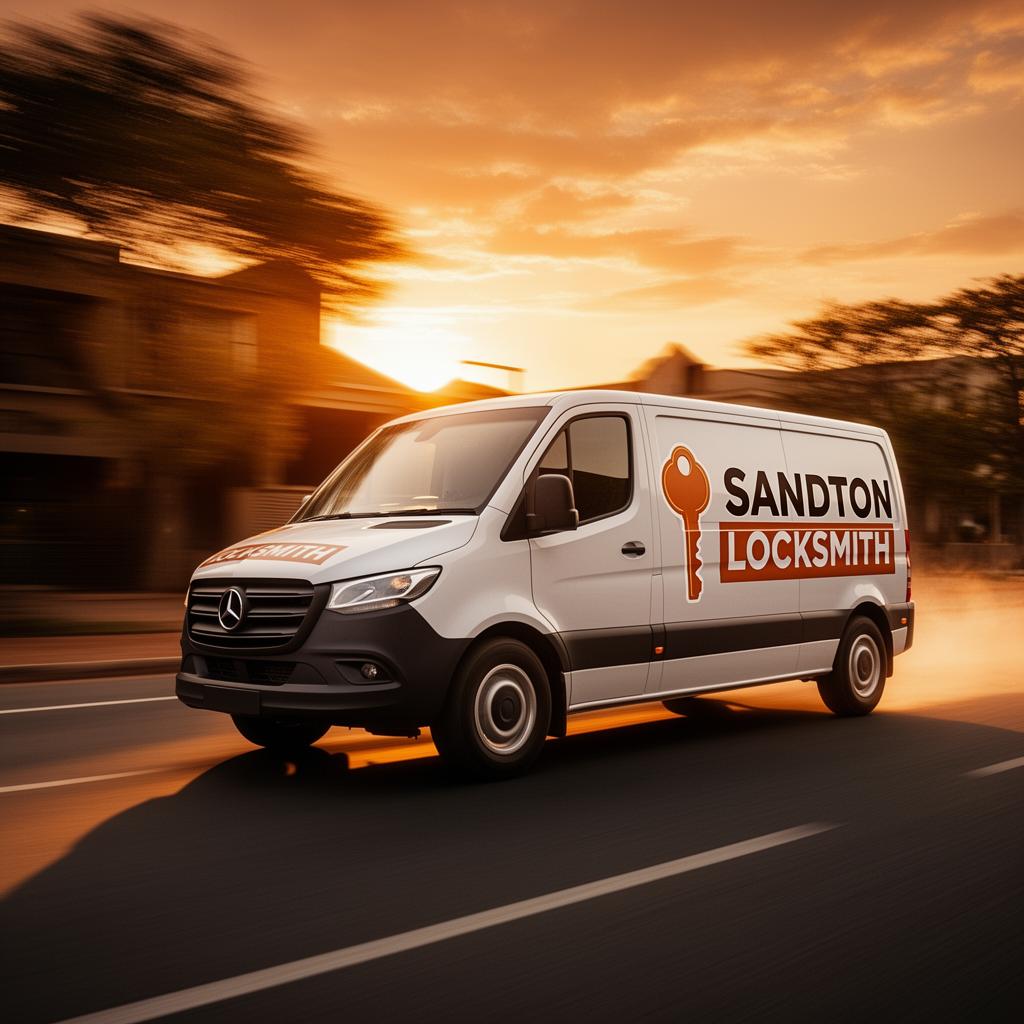
Complete Locksmith Services in Sandton
Residential, Commercial, Automotive and Emergency Locksmith Services Across Sandton, Fourways, Midrand, Randburg and Centurion.
Our Services
Every Locksmith Service You Need
Explore our full range of professional locksmith services. Tap any service to learn more.
Emergency Locksmith
Emergency Locksmith
24/7 rapid response for any urgent lock or key emergency, anywhere in the region.
Learn More→House Lockout
Locked out of your home? Damage-free entry to get you back inside fast.
Learn More→Apartment Lockout
Stuck out of your flat or complex? Quick, non-destructive access to your unit.
Learn More→Office Lockout
Locked out of work? We restore access to offices and business premises fast.
Learn More→24 Hour Locksmith
Round-the-clock locksmith help — day, night, weekends and public holidays.
Learn More→Locks & Hardware
Lock Change
Replace worn or compromised locks with secure hardware in a single visit.
Learn More→Lock Repair
Sticking, jammed or faulty locks repaired on site to full working order.
Learn More→Lock Installation
Professional fitting of new locks, deadbolts and high-security cylinders.
Learn More→Lock Replacement
Upgrade ageing or damaged locks with reliable, modern locking systems.
Learn More→Property Locksmith
Automotive Locksmith
Automotive Locksmith
Full car locksmith service — keys, remotes, ignitions and vehicle entry.
Learn More→Car Lockout
Keys locked inside? Non-destructive vehicle entry to get you moving again.
Learn More→Lost Car Keys
Lost all your keys? Replacement keys supplied and programmed on site for most vehicles.
Learn More→Car Key Replacement
Replacement car keys, remotes and transponders supplied and programmed.
Learn More→Vehicle Locksmith
Ignition repair, transponder programming and key fobs for all makes.
Learn More→Find It Fast
Which Service Do You Need?
Pick the situation that matches yours and we'll point you to the right service.
Why Us
Why Customers Choose Sandton Locksmith
Fast Response
Most addresses reached in 20–30 minutes from your call.
Mobile Locksmith Units
Fully-equipped branded vans positioned across the region.
Residential & Commercial Specialists
Homes, estates, offices and business security covered.
Automotive Locksmith Specialists
Car keys, remotes, ignitions and vehicle entry experts.
Transparent Pricing
Clear quotes before work begins — no hidden surprises.
24/7 Availability
Day, night, weekends and public holidays, all year round.
How It Works
Our Simple Service Process
Step 1
Call or WhatsApp
Reach us any time, day or night.
Step 2
Describe the issue
Tell us what happened and where you are.
Step 3
Technician dispatched
The nearest mobile unit is sent straight away.
Step 4
Technician arrives
On site in 20–30 minutes, fully equipped.
Step 5
Problem resolved
Sorted on the spot — you're back in control.
Need a Locksmith Right Now?
One call connects you to a branded mobile locksmith heading to your location.
The Shortest Useful Summary
If none of the above is read, four sentences carry most of it. Describe what stands between you and the door rather than what has gone wrong, because that decides what travels and whether the door can be reached. Ask for the call-out figure before anybody moves and check that it holds on arrival. Ask whether entry will be attempted without damage first. And where nothing is actually wrong with the hardware, understand that you are buying labour rather than parts.
Everything else on this page is elaboration on those four. They apply equally to a house, a flat, a business premises and a vehicle, and they are the whole of what a caller controls.
The fifth is not about the call at all. Most of what arrives as an emergency had been giving warnings for months — a lock that needs a knack everybody in the household has learned, one that misbehaves only in the cold, or one that has stopped accepting anything but a single worn key. Attending to any of those on an ordinary weekday is a service visit. Leaving them is how the same fault becomes a callout at an unsociable hour, at a moment nobody chose.
Who Can Ask for the Work
Before any of the above matters, one question has to be settled, and it is the one that most often stalls an otherwise straightforward job.
On a house, the person asking has to be the person who lives behind the door. That is established easily in the overwhelming majority of cases — something carrying the address, a neighbour who recognises you, a landlord or managing agent reachable by phone. It is not a request for formal paperwork, and it takes under a minute when anything at all is to hand.
On a rented property the split is worth knowing in advance. A tenant can be let back into their own home without the landlord's involvement, because that restores access rather than granting it. Changing or reconfiguring the lock afterwards alters the landlord's property and generally needs their agreement, which most leases address directly.
In a complex or an estate, your own unit door is yours to instruct work on. The boom, the pedestrian gate, common-area doors and anything on the perimeter belong to the body corporate, and work on those proceeds on the trustees' or the managing agent's instruction rather than a resident's.
In a commercial building the same principle applies one level up: your suite door is yours, and the street entrance, lobby, service corridor and fire exits belong to the landlord. And a lock change intended to exclude somebody who is lawfully in occupation is a legal matter between the parties — it gets declined rather than quoted.
Counting the Openings Before Anything Is Quoted
A quote given from a description over the telephone is a quote for whatever the caller happened to name, and that is reliably fewer doors than the property has.
Ask most households how many locks they own and the answer is two or three: the front door and the back door. Walk the property and it is six or seven. Add the vehicle gate, the pedestrian gate, a garden gate, the garage side door, the internal door from the garage into the house, a store room, and whatever secures pool equipment or a generator.
Those uncounted openings are uncounted precisely because none of them is anybody's daily route, which is also why each carries the oldest and cheapest hardware on the property. Nobody has revisited whatever was fitted at the time.
The economics follow from that. Discovered one at a time as each fails, every one of them is a separate attendance at whatever the rate is on the day. Counted once and dealt with together, the same work costs a fraction of it — and the marginal ones get caught before they fail rather than after.
Which is why work is priced per opening rather than as one figure for the property, and why counting is the first part of a visit rather than a separate exercise.
What Hardware Tells You Before It Stops
Almost nothing on a door fails without notice. The notice is usually months long, and it takes three recognisable forms.
The first is a lock that has developed a technique. Lift the door, pull it towards you, turn twice, jiggle. Everybody in the household has learned it and nobody calls it a fault any more — it has simply become how that door works. That is a mechanism reporting that it has spent most of its working clearance.
The second is a lock that behaves differently by temperature: difficult before eight in the morning and perfectly fine by mid-afternoon. Overnight the metal contracts, the internal clearances tighten, condensed moisture sits in the keyway and old lubricant is stiffer than it will be later. A fault that comes and goes is one nobody books, and that is exactly how it ends up permanent.
The third is a fresh key that will not turn in a lock where a worn one still does. That is a cylinder which has reshaped itself around one particular key over years, and it is at the end of its service life.
Every one of them costs a service while it is still a signal and a new mechanism once it has stopped being one. The difference in cost is considerable and the difference in inconvenience is larger, because hardware chooses its own moment to stop.
The Openings Worth Spending On
Spending on security tends to follow visibility, and visibility is a poor guide to where the weakness actually is.
The front door gets the attention because it is the door everybody looks at, and on the overwhelming majority of properties it is already the strongest opening there. A door is an assembly — the leaf, the frame, the hinges, the strike plate and its fixings — and it performs at the level of its weakest component rather than its best one, so adding to the strongest part changes very little.
The openings that deserve the money are consistent. The internal door from the garage, which sits on a latch because the garage is treated as interior space, meaning the largest and least sophisticated opening on the property has an uninterrupted route indoors. The patio slider, a large opening frequently held by a catch rather than a lock, facing a garden nobody overlooks. A store room or outbuilding secured years ago with whatever was to hand. And any window left routinely open for a genuine daily reason.
What those share is not weak hardware alone. It is position: each is out of sight from the street and frequently from the house itself, and the specification of the front door is not the relevant number.
An honest assessment quite often ends with a recommendation to spend less on the door you asked about and something on one you had not mentioned.
How the Work Actually Divides
Locksmith work sounds varied and resolves into a small number of situations. Knowing which one you have is most of the value of a phone call, because each needs different information and different things on the vehicle.
The first is access: a key exists, it works, and it is on the wrong side of a door or a windscreen. That is the simplest case, and what matters is whether the technician can reach the door and whether entitlement can be shown.
The second is a key that is gone. That is a different job, because something has to be established from nothing — and on a vehicle the cost turns almost entirely on whether a working key still exists rather than on the make of the car.
The third is hardware that has failed: a mechanism that has worn out, a door that has moved, a gate lock that has seized outdoors, a handle that has gone slack. That is repair work, and it is the category most often misreported as something else.
The fourth is not a fault at all. It is a change of circumstance — a purchase, a tenant, a staff departure, a lost bunch, the end of a renovation — where nothing is wrong with the lock and something is wrong with the list of people who can open it. That is a rekey, and replacing hardware to solve it is buying parts for an administrative problem.
Not sure which of those you have?
Describe what happens when you try it. That sentence usually settles it before anybody travels.
What Decides the Price
You should get a firm call-out figure on the phone, before anybody moves, for that hour and that area — and that figure should be the figure on arrival. If somebody will not commit to it on a call, that is the point to end the conversation.
The part that cannot honestly be settled beforehand is whatever turns on what is actually there. A lockout on a standard door is predictable; the same call where the door has a security gate over it, or an electronic lock, or a mechanism that has failed rather than simply being locked, is not the same job. A firm quote given before that is known is either padded for the worst case or about to be revised.
The hour changes the call-out, because somebody is being dispatched at that hour. It does not change the work: a cylinder that is a standard job at midday is the same standard job at midnight. Where the figure for the work itself climbs after dark, what is being billed is the inconvenience you are in.
On anything involving several doors — a property walk, a changeover, a business premises — the scope is the door count rather than the urgency, which is why counting is the first part of the visit. Most households name three openings and own six or seven.
Repair, Replace or Reconfigure
Three answers get offered for the same visible symptom and they are not interchangeable. Being told which one applies is worth more than any discussion of hardware.
Repair is right when the fault is alignment, contamination or a failed internal component. A door that has dropped on its hinges, a keyway that somebody has sprayed oil into, a handle whose spring has gone — all three are corrected without replacing the lock, and all three are commonly answered with a replacement instead.
Replace is right when hardware has genuinely reached the end of its life, when it is the wrong specification for its position, or when it has taken force. A cylinder that only accepts one particular key held a certain way is finished. An indoor-grade lock on an outdoor gate will seize again next season whatever is done to it. And forced hardware should not go back into service at all, because a mechanism attacked once fails under far less the next time.
Reconfigure is right when nothing is wrong with the lock and the problem is who holds a key. The cylinder already in the door is reset so every key previously issued stops working, the hardware stays put, and you pay for labour rather than parts. See lock replacement for how that judgement is made in practice.
What Is Not Locksmith Work
Being clear about the edges saves the hour that mattered, so it is worth stating plainly rather than leaving it to be discovered on site.
Alarm systems belong with the alarm company — a panel that will not disarm, a sensor triggering repeatedly, a zone that will not clear. Gate motors are automation: if the motor runs and the gate does not move, or nothing happens with power present, that is a gate company's work. What is locksmith work is the gate's lock, the pedestrian gate beside it and the manual override.
A shattered pane is glazing work, although the hole itself can be boarded and made safe in the meantime. Access control credentials — tags, fobs, intercoms, booms — are administered by whoever runs that system; the mechanical door behind it is locksmith work and the credential is not. Cutting keys is not a service offered here.
Some vehicle work sits outside mobile scope too: anything needing a car lifted, dismantled or taken into a workshop, and a small number of recent vehicles where the manufacturer restricts key data tightly. The registration settles which group a vehicle is in before anybody travels — see the automotive locksmith page.
Need somebody now?
Response is 20 to 30 minutes across Sandton, Fourways, Midrand, Randburg and Centurion, at any hour.
Locksmith Services FAQ
What locksmith services do you provide?+
We provide a complete range of locksmith services — emergency lockouts, lock changes, lock repairs, lock installation and replacement, residential and commercial security, plus full automotive locksmith work including car lockouts, lost car keys and car key replacement.
How quickly can a locksmith arrive?+
Our branded mobile units are positioned across the region, so most addresses in Sandton, Fourways, Midrand, Randburg and Centurion are reached within 20–30 minutes of your call.
Do you offer emergency locksmith services?+
Yes. We operate 24 hours a day, 7 days a week, every day of the year. Whether you are locked out at 2am or need an urgent lock change, a technician is dispatched immediately.
Do you work with residential and commercial locks?+
Absolutely. We handle everything from home door locks, gate locks and high-security upgrades to commercial access control, master key systems, safes and office security.
Do you provide automotive locksmith services?+
Yes. Our automotive locksmiths handle car lockouts, lost car keys, car key replacement, transponder key programming and ignition repair for most makes and models.
Professional Locksmith Services Available 24/7
Trusted across Sandton, Fourways, Midrand, Randburg and Centurion — call now for immediate dispatch.