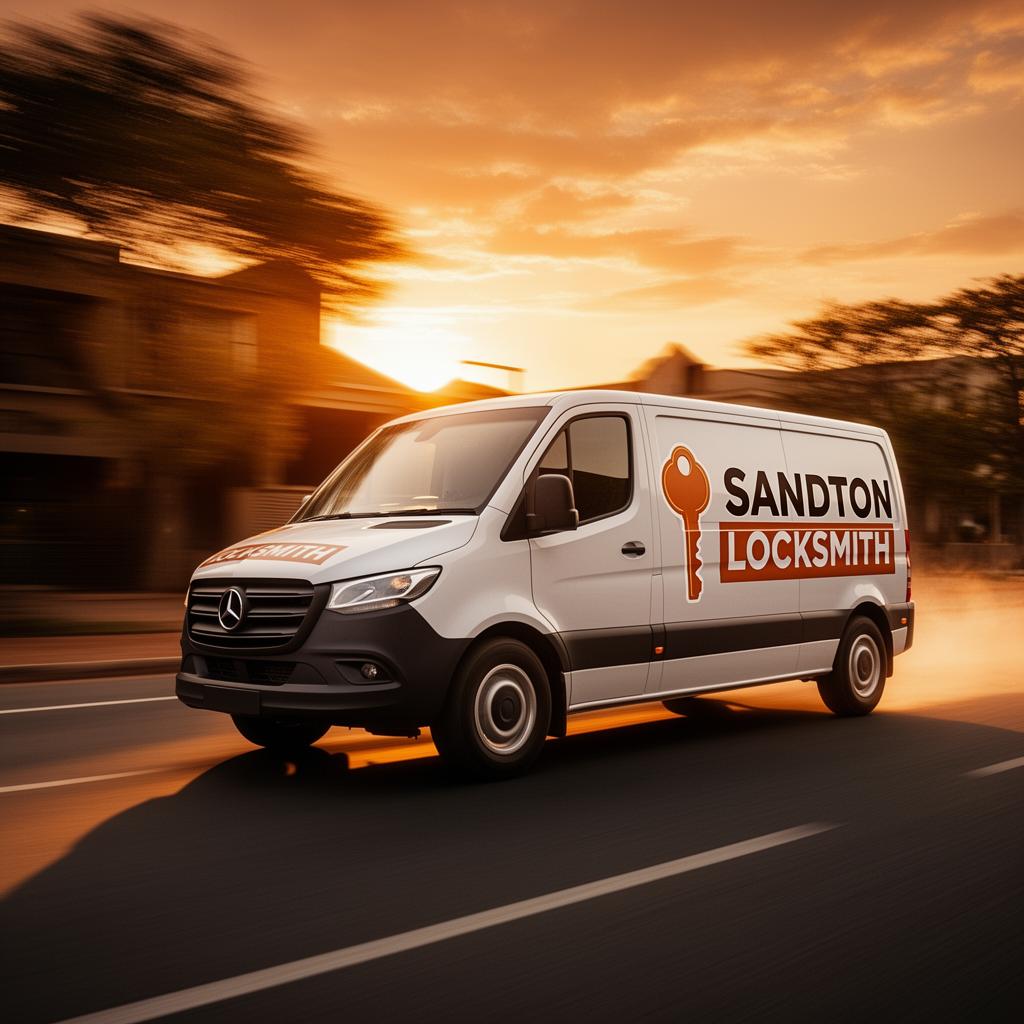
Two or Three Controlled Layers Between the Street and a Hyde Park Door
Hyde Park is apartments, retail and structured parking rather than freestanding stands, and that produces a specific pattern. Between the street and a front door there are usually two or three other doors, none of which belong to the resident, and a parking level with its own access rules. Getting an emergency locksmith to your actual door is therefore a building question before it is a lock question.
The second theme is ownership. Your flat door is yours; the lobby, the stairwell, the corridor and the parking-level door are not, and no locksmith can work on them because a resident asked.
This article covers building access, the ownership line, the parking levels, and the ordinary work inside a unit.
Locked out of a flat or a car here?
Call and say which — they are different jobs. Give the building and floor, or the parking level and bay.
Most of These Calls Start in the Car Park
It surprises people, but at a mixed retail and residential address the majority of locksmith callouts are about vehicles rather than doors.
The reason is arithmetic. A resident locks themselves out of a flat perhaps once in several years. The same building's parking levels see hundreds of vehicle movements a day, every one of them an opportunity to put keys down while loading, and central locking on many cars will then secure the vehicle with the key inside it.
So the useful preparation here is vehicular rather than architectural: know your level, know your bay, and keep a spare key somewhere other than the glovebox — which our locksmith for car lockout page sets out for structured parking generally.
It also means the make, model and year matter as much as the address. Those three decide the locking system and therefore the approach, and they are the first thing an automotive locksmith asks for.
The Parking Level Is a Third Environment
Structured parking introduces its own rules, and it is where a large share of Hyde Park callouts actually happen.
A basement or covered level has a height restriction that decides which vehicle can enter, and building or centre security who will reasonably want to know why somebody is working on a car. Some require the driver present throughout.
Give the level and the bay rather than a street address. A technician who arrives at a boom with neither waits while somebody is found and satisfied, which is frequently longer than the drive — the same dynamic our locksmith for car lockout work encounters at every structured car park.
And if the key is genuinely gone rather than shut inside, that is a different job with a different timeline, covered by our car key replacement page.
What Hyde Park Calls About
Six situations across flats, parking and retail.
Flat door pulled shut with keys inside
The commonest call. The lock work is quick; building access decides how soon it starts.
Keys shut in a car on a parking level
Height limits and building security. Give the level and bay rather than the street address.
New tenant taking over a unit
Rekey rather than replace. Every key held by anyone before that day stops working in one visit.
Key lost somewhere in the centre
A replacement rather than a lockout, and a longer job. Report it to management too — keys do get handed in.
Retail unit that will not open
Authority and the alarm sequence get settled while a technician is already travelling.
Key snapped in a unit door
Extraction on site. The lock usually survives provided nothing has been tried on the fragment first.
Taking over a flat here?
Book the rekey for the handover day. Call or send a WhatsApp message with the building, the unit and how many locks there are.
Retail Units Sit Under a Different Set of Rules Again
At an address that mixes shops with apartments, a third category of door appears and it behaves like neither of the others.
A retail or office unit answers to a lease as well as to the building. That lease frequently reserves the locks to the lessor, which means the landlord or managing agent has to instruct work even on the tenant's own door — a check worth doing now rather than at seven in the morning, as our locksmith for office lockout page explains.
It also has a trading deadline attached, which changes the priority of the call entirely. A resident locked out at eleven at night is inconvenienced; a unit that cannot open before trading is losing money by the minute, and both are handled accordingly.
And it has an alarm, which has to be sequenced before the door is opened rather than dealt with afterwards — the single most useful thing a commercial locksmith in Sandton customer can have ready on the call.
Three Categories at One Address
The practical value of separating them is that each has a different first question, and asking the wrong one wastes the call.
For a flat, the first question is who is on duty and whether you can be reached to confirm a technician. For a vehicle, it is the level, the bay and whether the parking is covered, because height limits decide what can attend at all.
For a retail or office unit it is neither of those: it is who can authorise the work, and what the alarm arrangement is. Those two settle a trading morning, and they are the whole reason our commercial locksmith calls start differently from residential ones.
Saying which of the three you are at the start of the call routes everything after it correctly — and where the answer is a vehicle, the make, model and year come next, as our car key replacement page sets out.
How a Callout to a Block Runs
Five steps, and the first two account for most of the elapsed time.
- Step 1
Building or parking access is established
Building, floor, unit, or level and bay. Plus who is on duty at that hour, which is the whole variable.
- Step 2
Ownership of the door is confirmed
Your unit, or common property. Communal work needs trustees, the managing agent or the landlord in writing.
- Step 3
Residence or authority is checked
A lease, a levy account, an ID matched inside, or company authority for a unit. Asked every time.
- Step 4
The door is opened as gently as it allows
Picking and manipulation first, bypass second, destructive entry only where nothing else works and only after you are told.
- Step 5
The cause is separated from the symptom
A door pulled shut is one thing. A failing lock or an unknown key count is another, and it is explained rather than bundled.
Four Things That Speed Up a Block Callout
Each is worth more than anything the technician can do at speed.
- The building name and the floor
- A street address alone in a block-dense area can mean several entrances. Naming the building removes a guessing step.
- Whether anybody is on duty
- A night guard, a caretaker or nobody at all are three different jobs needing three different approaches.
- Whether you can meet at the entrance
- If you can get to the lobby door, say so. It converts the hardest part of the job into a non-issue.
- Proof of residence, already open
- A lease or levy account on your phone. It is asked for on every job and it is faster to have ready.
How the Service Operates
Operating facts you can check rather than claims. Reviews sit on our Google Business Profile, readable directly.
Save the number while you are inside
The worst moment to choose a locksmith is standing in a lobby at midnight. Call or send a WhatsApp message now.
Better Hardware Fails Differently
On properties where the hardware is genuinely good, the calls are not about cheap locks wearing out early. They are about well-made systems failing in ways that need diagnosing rather than forcing.
A cheap cylinder fails by wearing out. A high-security cylinder rarely wears out at all — it fails because of something around it. The most frequent cause is contamination: a precision mechanism with tight tolerances is far less forgiving of dust and grit than a loose one, and general-purpose oil sprayed into a keyway designed to run dry collects that material and binds the mechanism within months.
The second is the key rather than the lock. High-security keys are frequently heavier and more complex, and one carried on a loaded ring, dropped repeatedly, or bent in a pocket transmits all of that into a mechanism with no tolerance for it.
The third is that nothing is wrong with the lock at all and the door has moved — which happens to heavy doors as readily as light ones, and produces the familiar tell: the key turns freely with the door open and fights with it closed.
There is a specific trap in all this. Better hardware is harder to open without damage, which makes the gap between a technician who diagnoses it and one who simply attacks it far wider here — and the width of that gap is the price of the cylinder.
Safes, and the Failure That Causes Most of the Alarm
A safe that will not open produces more alarm than almost any other call, and in the majority of cases the cause is disappointingly ordinary.
The single most common by a wide margin is a dead battery in an electronic keypad. The safe is intact, the lock is intact, the contents are intact, and a set of batteries reached the end of their life while the door happened to be closed — which is the state the door spends almost all of its time in, so the odds always favoured it happening exactly that way. It does not require drilling, and on many models there is an external contact for precisely this situation.
The genuinely awkward cases are different: a combination nobody has entered in three years and can no longer reproduce, boltwork that has jammed on an older mechanical unit, or a safe that has been moved and knocked in the process.
The case worth avoiding entirely is a safe somebody has already attempted. Better units contain a relocker — a deliberate mechanism that fires if the lock is attacked, permanently securing the boltwork — so a unit that would have opened non-destructively in the morning can be a genuinely difficult job by the afternoon.
Which makes the practical advice unglamorous: if it will not open, leave it closed and describe it accurately. See safe locksmith in Sandton.
Related Reading and Services
House lockout assistance
How entry is worked in controlled buildings and what proof is asked for at the door.
House lockout assistanceCar lockout
The parking-level version, including height limits and building security.
Car lockoutLock rekey in Sandton
The handover job for a flat: every previously issued key retired, hardware kept.
Lock rekey in SandtonOffice lockout
For retail and office units in the same building, where authority comes before the door.
Office lockout24 hour locksmith in Sandton
What genuinely changes after dark, and what should not change at all.
24 hour locksmith in SandtonLocksmith in Strathavon
The same block-and-suite dynamic in a neighbouring suburb.
Locksmith in StrathavonIf this was useful, our article on working inside a managed precinct covers contractor access and who authorises which door, and two generations of hardware covers what a half-renovated property produces.