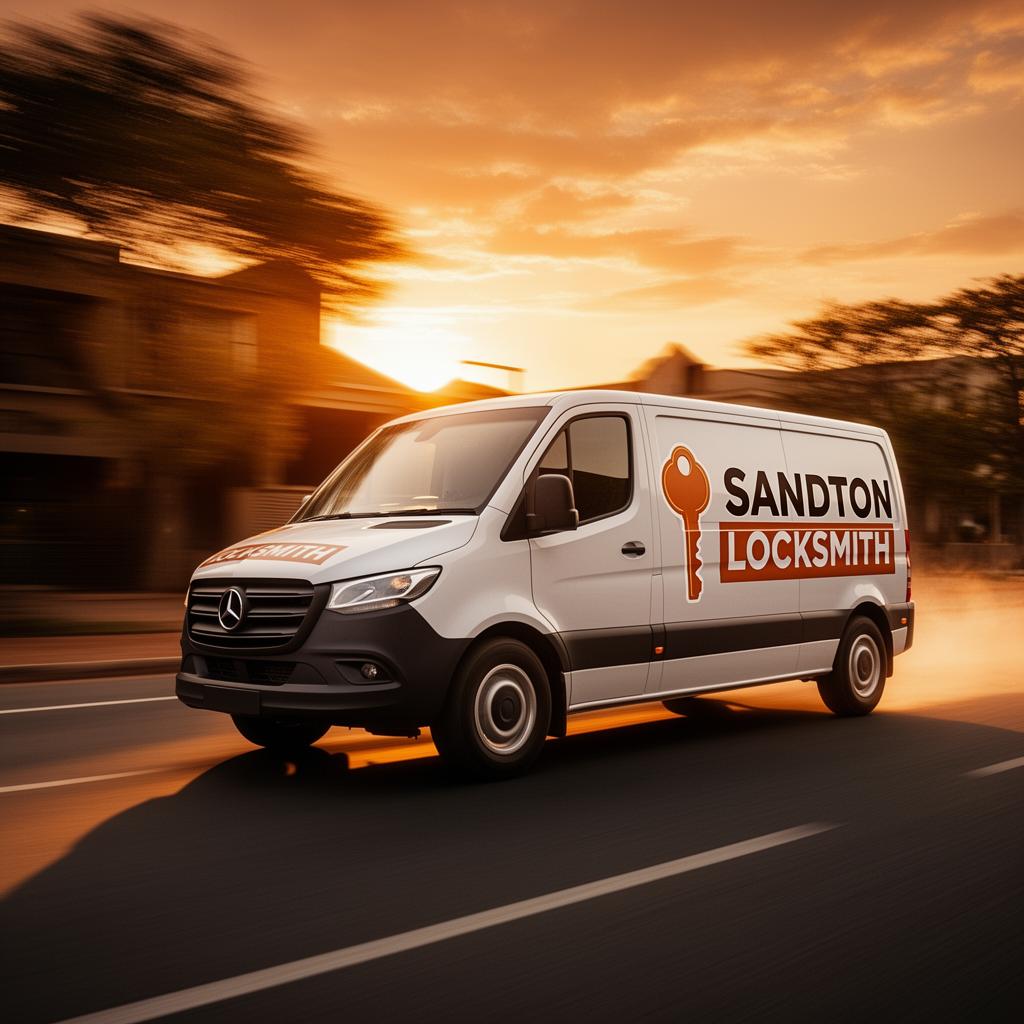
Safe Locksmith Services in Fourways
When a safe will not open, the instinct is to force it — but doing so often causes more damage and can permanently lock the mechanism. Our safe locksmith team in Fourways uses professional techniques to open safes without harming the contents or the unit itself.
We service a wide range of safes found in Fourways homes and offices, including key-operated models, combination dial safes, electronic keypad units, and biometric lock systems. Whether the battery has died on a digital safe or the mechanical combination has been lost, we have the tools and expertise to get it open.
For commercial clients along Witkoppen Road and in Fourways Crossing business parks, we provide scheduled safe maintenance, combination updates after staff changes, and emergency opening when time-sensitive documents or valuables are inaccessible.
We also provide emergency locksmith in Fourways, 24-hour locksmith in Fourways, lock change in Fourways, lock repair in Fourways for properties across Fourways.
Safe Maintenance and Security Advice
Regular maintenance prevents unexpected safe lockouts. We recommend testing your safe's locking mechanism monthly and replacing batteries on electronic models before they reach critical levels. A periodic service by our team ensures the bolts, hinges, and lock components remain in working order.
If you are considering purchasing a new safe, we can advise on the right size, fire rating, and burglary rating for your needs, and handle the full installation including secure anchoring.
For door and gate security, see our full locksmith in Fourways service covering every type of lock across the Fourways area.
Locksmith Services in Fourways
Explore our full range of locksmith services available in Fourways. Each service page covers a specific area of expertise with local information and direct contact options.
Business Safes and Shared Custody
A safe in a business is a different object from one in a house, not because of what it is but because of how many people relate to it.
A domestic safe has one or two people who know the combination and a single clear owner. A business safe has a manager, an assistant manager, whoever opens on a Saturday, a regional person who set it up, and a former employee nobody ever removed from the arrangement — because there is no mechanism for removing anybody from a combination.
That is the structural problem, and it is worth stating plainly: a key can be retired and a remembered combination cannot. When somebody leaves, the honest position is that they still know how to open the safe, and the only response is to change it.
The second issue is authority. Whoever is standing in front of a safe that will not open at seven in the morning may not be the person who can authorise work on it, particularly where it belongs to a landlord, a franchisor or a head office. Establishing that in advance is what keeps a stuck safe to a single visit.
What Belongs in a Safe
A surprising number of safes turn out to be holding the wrong things, and the household discovers that only at the point where getting into it has become a problem.
What genuinely belongs in one is the irreplaceable and the difficult to reissue: identity documents, title deeds, wills, contracts, a small amount of cash, and anything of sentimental value that cannot be bought again. Those are things you rarely need at short notice, which is exactly what makes a safe the right home for them.
What causes difficulty is the item somebody needs urgently and unpredictably. A single set of car keys. The only copy of a passport needed for a flight the next morning. Medication. A laptop used daily. Each of those turns a flat battery in a keypad from an inconvenience into an emergency.
There is also a category worth naming plainly: a fire-rated document safe and a burglary-rated safe are built for different threats, and a good number of units are honestly rated for one while being quietly assumed to cover both.
The practical rule is that a safe should hold what you would struggle to replace and would not need in the next hour. Anything you might need in the next hour wants a different arrangement — which for keys specifically means a sensible key structure rather than a box. See locksmith for lock rekey.
Most Safes Fail for Very Ordinary Reasons
A safe that will not open produces more alarm than almost any other call, and in the majority of cases the cause is disappointingly mundane.
The single most common by a wide margin is a dead battery in an electronic keypad. It is worth sitting with how ordinary that is: the safe is intact, the lock is intact, the contents are intact, and a set of batteries reached the end of their life while the door happened to be closed — which is the state the door spends almost all of its time in, so the odds were always overwhelming that it would happen exactly that way.
It does not require drilling and it does not require the safe to be replaced. On many models there is an external contact for precisely this situation, and where there is not, there are non-destructive routes that leave the unit serviceable.
The second most common cause is a combination nobody has entered in two or three years and can no longer reproduce. That is more work than a flat battery and it is still, in most cases, recoverable rather than terminal.
Safe will not open?
Call and say what kind — keypad, dial or key — and exactly what it does when you try. That sentence usually decides whether it is a ten-minute job or a real one.
The Cases That Are Genuinely Difficult
It would be dishonest to suggest every safe opens gently. Some do not, and it is better to know which is which before anybody starts.
Jammed boltwork on an older mechanical safe is the classic difficult case: the mechanism has corroded, a component has failed internally, or the unit has been moved and knocked hard enough to displace something. From outside, the symptoms look identical to a simple lockout, which is exactly why diagnosis comes before anything else.
A safe that somebody has already attempted is the other one. Attempts leave damage and damage narrows the options — a drilled keyway, a forced dial, a levered hinge. What might have been a straightforward opening in the morning can be a destructive one by the afternoon.
The third is a relocker that has fired. Better safes contain a deliberate mechanism that triggers if the lock is attacked, permanently securing the boltwork. That is the safe doing exactly what it was bought to do, and it is the strongest possible argument against letting anybody have a go first. See safe opening for what that specialist work involves.
Where a Safe Should Actually Be Fitted
Most of the money spent on a safe goes into the box. Most of what determines whether it does its job is decided by where it is put and what it is bolted to.
Anchoring comes first. Below a certain weight an unfixed safe can simply be carried out and opened elsewhere with no time pressure at all, which converts every security feature it has into a delay rather than a barrier. Bolting it into a concrete floor changes the entire problem, and it costs a small fraction of the safe.
Position works in two directions. Somewhere obvious — a main bedroom cupboard, a study desk — is found immediately. Somewhere unremarkable takes time to locate, and time is the resource that is always shortest. But a safe fitted somewhere so awkward that the household stops using it properly is worse than an obvious one, because a safe standing open is not a safe at all.
What it is fixed into matters as much as the fixings themselves. Bolting into a suspended timber floor, into plaster over a cavity, or into a fitted cupboard that is itself only screwed to a wall achieves considerably less than the bolts suggest. That assessment is part of any residential locksmith in Fourways visit where a safe is involved.
The Only Maintenance a Safe Needs
Safes are close to maintenance-free, which is exactly why the small amount they do need is universally skipped.
For an electronic unit the whole of it is the batteries, and they should be changed on a schedule rather than when the keypad starts behaving oddly — because on a good number of units the failure mode is not a decline but simply a door that stops opening. Once a year, on a date somebody remembers, costs almost nothing.
The second item is exercising the mechanism. A safe opened twice a year sits idle for six months at a time, and idle mechanisms collect moisture and, on older units, corrode. Opening and closing it properly every few weeks is free.
The third is the override, whatever form it takes — a concealed keyway, an external power contact, a backup dial. Knowing where it is and where its key lives is what turns a dead battery into an inconvenience rather than a callout, and it is the single most useful thing anybody with a safe can establish on a quiet afternoon.
What's included
- ✓Non-destructive safe opening
- ✓Electronic and combination lock repairs
- ✓Code and combination resets
- ✓Battery replacement for digital safes
- ✓Safe installation and anchoring
- ✓Commercial and domestic safe servicing
- ✓Confidential, discreet appointments
Suburbs we cover near Fourways
Safe Work in Fourways: What Is Possible
A safe with a lost combination, a missing key or a mechanism that has stopped responding is not a write-off, and safe opening is a routine job for a mobile locksmith rather than a last resort. Most can be opened at the property without destroying the safe, and the technician will tell you before starting whether yours is one of them and what the alternative would involve.
Mechanical safe locks are precision components. One that has sat untouched for years behaves differently from one in weekly use, so a safe that is becoming reluctant is worth attending to before it stops entirely. Nothing needs to be moved and nothing leaves the premises.
Whatever the job, the two details that most affect how quickly it is resolved are the exact address and whether the property sits behind a gate or boom that needs clearing first. Both take a moment on the phone and can save half an hour at the door.
From lockout to recovery: knowing what can still be saved
A safe lockout is not always a single problem, and that distinction matters before anyone starts drilling, prying, or replacing parts. With a mechanical safe, the issue may sit in the dial, spindle, relocker, or worn internal components; with an electronic safe, the fault might be the keypad, control board, solenoid, or a weak battery supply that has already interrupted safe access. Our approach is to diagnose first, because good safe opening protects the container, while careless forced entry can turn a repairable fault into permanent damage. If the safe can be opened cleanly, we then assess what can be restored: the locking unit, handle assembly, hinges, bolts, or internal movement may be repaired or adjusted rather than replaced. In some cases, safe repair is the right outcome because the body of the safe is sound and only the access mechanism has failed.
In other cases, especially after impact, moisture, or previous tampering, opening the safe is only the first step and a full repair recommendation follows. This is where a locksmith with safe experience is the right escalation, and it is also where a broader service contact such as emergency locksmith fourways or even a 24 hour locksmith can make sense if the access problem is urgent and the safe protects cash, documents, or valuables. We also understand that not every access issue belongs in the same category as car lock repair; safes require a more controlled, non-destructive method and a different technical judgment. The goal is not just to get the door open, but to leave you with a secure, usable safe and a clear explanation of whether repair, reset, or replacement is the most practical next step.
When a Safe Lockout Points to Repair, Not Just Access
A safe lockout in Fourways is not always a simple access problem. At the point where a door will not release, the dial feels irregular, or an electronic unit accepts input but never clears the bolt, a proper inspection helps separate a minor issue from a deeper safe mechanism fault. A skilled safe locksmith Fourways callout focuses on the condition of the lock body, boltwork, hinge alignment, keypad or dial response, and any signs of tampering or impact before recommending the next move. That is how safe repair decisions are made responsibly, rather than by guessing at parts or forcing the door. In some cases, a clean repair is enough: a worn internal component is corrected, the locking sequence is restored, and the safe can return to normal use without unnecessary intervention. In other cases, the fault is more extensive, especially after repeated failed attempts, corrosion, or damage around the locking area.
Then the recommendation may shift toward safe replacement, not because opening failed, but because the safe is no longer reliable or secure enough for continued use. For business owners and homeowners in Fourways, that distinction matters, because a recurring fault can create more downtime than a planned replacement. An experienced Locksmith in Fourways will explain whether the issue is mechanical wear, electronic failure, or structural damage, and will outline the most practical remedy before any further work is done. That approach protects the contents, reduces avoidable damage, and gives you a clear path forward after a safe lockout. If you need a local Sandton Locksmith for a safe that is jammed, damaged, or behaving unpredictably, the right diagnosis is what turns a frustrating lockout into a lasting solution.