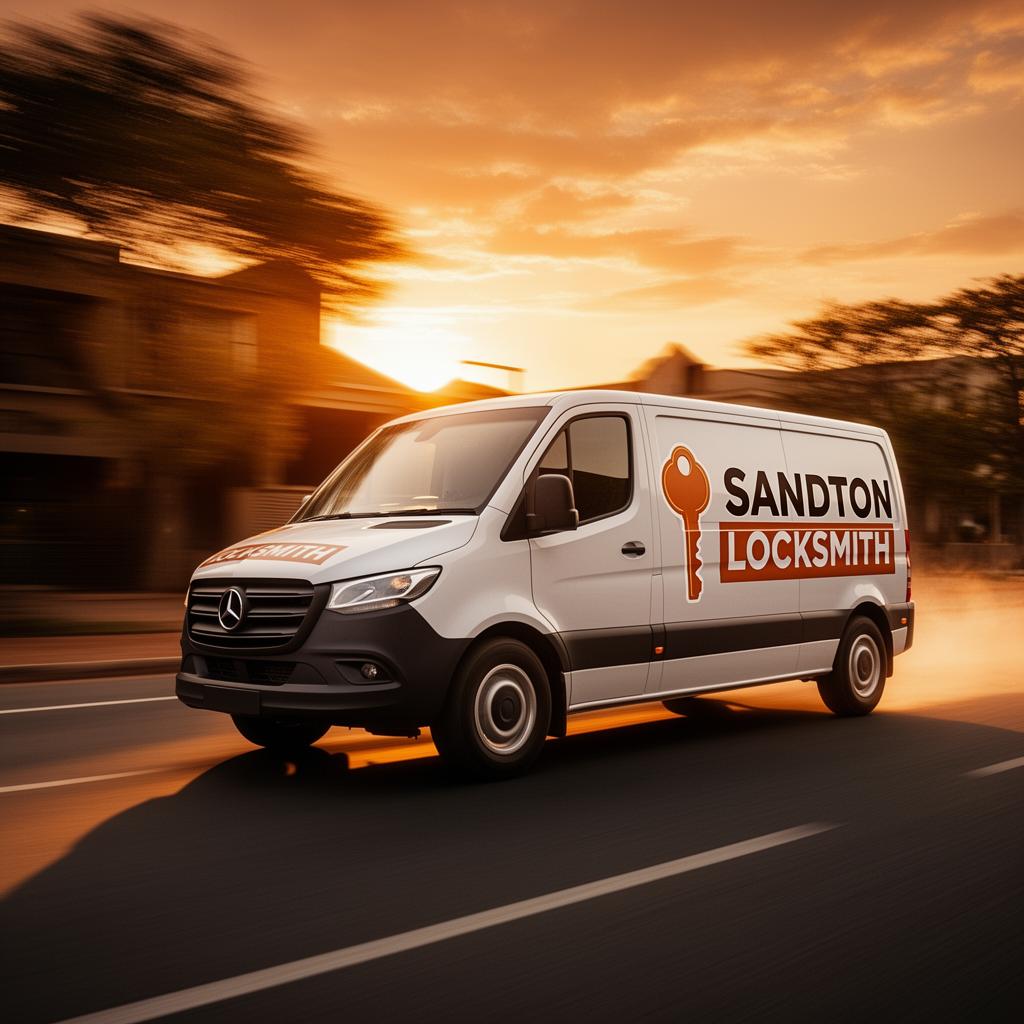
Randburg's Trading Hours Produce Callouts at Both Ends of the Day
Randburg's retail strips keep hours most suburbs do not, and that produces a distinct pattern of commercial callouts at both ends of the day: a door that will not secure at closing, and a premises that cannot open at six. Our commercial locksmith team handles both, and in almost every case the fault is not the lock.
It is the door closer, the shutter guides or the floor spring. Each of those presents as a lock problem to whoever is trying to close up, and replacing a cylinder for any of them changes nothing at all. Our locksmith for lock repair work applies the same principle on residential doors, where the causes are slower but identical.
This page covers the three components that actually fail, what a trading emergency needs before a technician can act, and what belongs on a schedule rather than on an emergency callout.
Shopfront will not lock, or will not open?
Call with what has happened and the hour you must be trading. Have your alarm company number and account reference to hand.
Three Components, and None of Them Are the Lock
Almost every fault reported on a Randburg shopfront is one of these, and each has a different cause and a different fix.
The door closer fails first and causes the most damage on the way. Out of adjustment it lets the door slam, battering the latch, the keep and the frame every single time. Weakened it lets the door drift and never quite latch — which leaves premises unlocked while everybody believes they are shut for the night.
The roller shutter is second, and the lock at the bottom is almost never the fault. Grit in the guides, a slat that has taken a knock, a spring that has weakened, or a shutter that is simply out of square. Forcing a jammed shutter adds a bent curtain to what was a service, and our locksmith for commercial lock repair visits check the guides before anything else.
The floor spring is third, on any frameless glass entrance. A weakened spring lets the door sit out of square so the bolt no longer meets its housing; an over-adjusted one drives the glass into its floor socket every time it closes. Glass doors also give almost no warning — a timber door binds gradually, a glass door works perfectly until the bolt misses, which is why our locksmith for office lockout team sees them arrive as sudden failures.
What Randburg Businesses Call About
Six situations covering most commercial work here, and what each one actually needs.
Cannot open at six in the morning
Treated as a trading emergency rather than an early callout. Say the actual opening time — it orders the job better than the word urgent.
Door will not secure at closing
Usually a weakened closer rather than the lock. The premises stand unlocked while everybody believes they are shut for the night.
Roller shutter jams halfway
Grit in the guides, a knocked slat or a tired spring. Pulling harder is what adds a bent curtain to a straightforward service.
Glass door bolt suddenly misses
A floor spring that has weakened. Glass doors give almost no warning, which is why they belong on a schedule rather than a callout.
An employee left with a key
Reopening a door does nothing about it. Where the hardware is sound, reconfiguring the cylinders ends it for less than replacement.
Escape door has been padlocked
Usually added after a break-in, for an understandable reason. It converts a fire exit into a trap and there are legitimate alternatives.
What a Trading Emergency Needs Before Anybody Can Act
A shop that cannot open at nine is losing a day, and those jobs are ordered on the trading time rather than on the hour the call came in. Two things decide whether it goes smoothly, and both are settled by phone.
Authority is the first. Premises belong to an entity rather than to a person, so work is authorised by a director, an owner, or a manager holding written authority — on a letterhead or from a company address that can be checked. The first staff member to arrive is not by themselves sufficient, however senior.
The alarm is the second. Opening a commercial door on an armed system turns a lockout into an armed response callout and a false alarm charge, so have the alarm company's number and your account reference ready. The sequence gets agreed before anything opens, and where the premises run on credentials rather than keys our locksmith for access control page covers how the interlock is handled.
Both take a couple of minutes on the phone while a technician is already travelling, and both cost the whole morning if they are left until somebody is standing at the door. Our locksmith Randburg operators raise them on every commercial call for that reason.
Closing Up: the Five-Second Check Worth Doing Nightly
Most Randburg shopfront problems are found at seven the next morning rather than at closing. These five seconds at the end of a shift move that discovery to a point where it can still be fixed.
- Step 1
Let the door close on its own
Do not pull it. If it does not travel all the way to the latch by itself, the closer has weakened and the shop will be standing unlocked overnight.
- Step 2
Push it from outside
Once it has latched, push. A latch that gives at all is meeting the edge of its keep rather than entering cleanly, which is an adjustment rather than a lock.
- Step 3
Watch the shutter run
It should travel evenly and quietly. Hesitation on one side means grit or a spring going, and it is far cheaper caught now than jammed at six in the morning.
- Step 4
Check the fire exit is clear
Nothing stacked against it, nothing added to it. That is the door nobody looks at until the day it matters most.
- Step 5
Report anything that felt wrong
To whoever books maintenance, the same night. A door that needed a shove today is a callout on a trading morning within a few weeks.
Trading in an hour and the door will not open?
Call now and say the opening time. Authority and alarm details can be sorted by phone while a technician is already travelling.
Escape Doors and the Padlock Somebody Added
Escape doors are rarely disabled deliberately. They are disabled by ordinary operational decisions that seemed reasonable at the time.
A chain and padlock added after a break-in. A bolt fitted at the top because the door rattled. A pallet, a delivery, a stack of stock against it because the storeroom ran out of room. A secondary lock fitted by a contractor solving a security problem who did not know the door's function.
Every one of those converts a compliant escape route into a trap. The requirement is absolute: a push bar has to release in one motion, under body weight, by somebody who has never used the door — no thumbturn first, no second action. Our locksmith for panic bars page sets out why nothing about that is negotiable.
The security concern behind it is usually genuine and it is solvable without compromising egress. Outside access devices allow controlled entry from outside while the bar releases freely from inside. Alarmed bars sound locally when the door is used, which stops casual propping. Neither is expensive, and our locksmith for lock change visits can fit them alongside whatever else is being done.
What Belongs on a Maintenance Schedule
Four items. Each costs less as a planned visit than as the emergency it prevents, and each happens at a time you choose.
- Door closers on every high-traffic door
- The component that fails first and damages the most on the way. Adjustment costs a fraction of the latch, keep and frame repairs a slamming door causes.
- Roller shutter guides and springs
- Grit and a weakening spring, not the lock. Catching it early is the difference between a service and a bent curtain.
- Floor springs on glass entrances
- The only way to catch these, because a glass door works perfectly until the bolt misses. There is no gradual warning to notice.
- Anything on an escape route
- Tested monthly, with the corridor in its normal state rather than after tidying up. Somebody on site can do it; it does not need a contractor.
How the Service Operates
Operating commitments rather than claims, each visible during the visit itself.
Authority is confirmed on every commercial job without exception. It is the reason nobody else can call this number, name your premises and have a door opened while the shop is closed.
Read the reviews on our Google Business ProfileThe Door Behind the Counter
In any premises that handles cash there is a small internal door that matters more than its size suggests, and it is usually secured with whatever was on it when the unit was fitted out.
It is the door to the back office, the cash office, or the room where the safe and the day's takings live. It is often a standard internal door with a domestic handle, sometimes hollow-core, in a frame that was never intended to resist anything — because when the building went up it was a room, not a cash office.
What makes it consequential is that everything else in the premises is a delay and this door is the objective. The shopfront, the shutter and the alarm all buy time; this is the door at the end of that time. Specifying it properly changes the arithmetic of the whole premises far more than another improvement to the entrance would.
The second consideration is who can open it, which in a business with staff turnover is a live question rather than a settled one. A cash office that opens on the same key as the stock room is not a controlled space, whatever is written in the procedure.
Both are inexpensive to correct and both are routinely left as inherited. Putting that door on its own key, with proper hardware in a reinforced frame, is ordinary commercial locksmith in Randburg work.
What Can Actually Be Fitted to a Shopfront
Requests to improve a glass shopfront door are common and the honest answer is more constrained than most tenants expect, so it is worth setting out why.
An aluminium-framed glass door gives very little to work with. The lock sits in a narrow stile or in a patch fitting at the base, the fixings go into thin extruded aluminium rather than into timber or steel, and the glass carries no load and offers no purchase. A heavier lock does not make that assembly stronger — it concentrates more force into the weakest part of it.
It also changes what failure looks like. These doors rarely fail at the cylinder. They fail at the floor closer, at the pivot, or because the door has settled a few millimetres and the bottom patch no longer engages its floor socket cleanly. The symptom is a door that will not lock and the cause is not in the lock, so replacing the cylinder achieves nothing but a bill.
What can be done is real, though: servicing the closer, correcting the drop, replacing a worn patch fitting, upgrading the cylinder within what the stile will carry, and — where the exposure justifies it — a properly fitted security shutter or gate outside trading hours.
The useful first step is describing it accurately on the phone: that it is a glass shopfront door, and whether it swings shut on its own. That is what determines whether the right parts arrive. It is standard commercial lock repair once correctly identified.
Related Locksmith Services in Randburg
The specific work a commercial assessment most often leads to.
Locksmith for commercial lock repair
Closers, shutters, floor springs and keeps on doors that cycle hundreds of times a day, planned rather than reactive.
locksmith for commercial lock repairLocksmith for office lockout
Before-trading callouts, who may authorise entry, and why the alarm has to be part of the plan first.
locksmith for office lockoutLocksmith for panic bars
Escape hardware that releases in one motion, and the secure alternatives to a padlock on a fire exit.
locksmith for panic barsLocksmith for safes
Safe work at the premises, with ownership established before anything is touched and the unit left usable afterwards.
locksmith for safe opening24 hour locksmith
The night side of the service, including late-trading shopfronts and early-morning business callouts.
24 hour locksmith RandburgEmergency locksmith
How urgent work is dispatched here, including anything that leaves premises insecure overnight.
emergency locksmith RandburgPut it on a schedule instead of a callout
A planned visit on the doors that matter costs less than the trading morning it saves, and it happens at a time you choose.