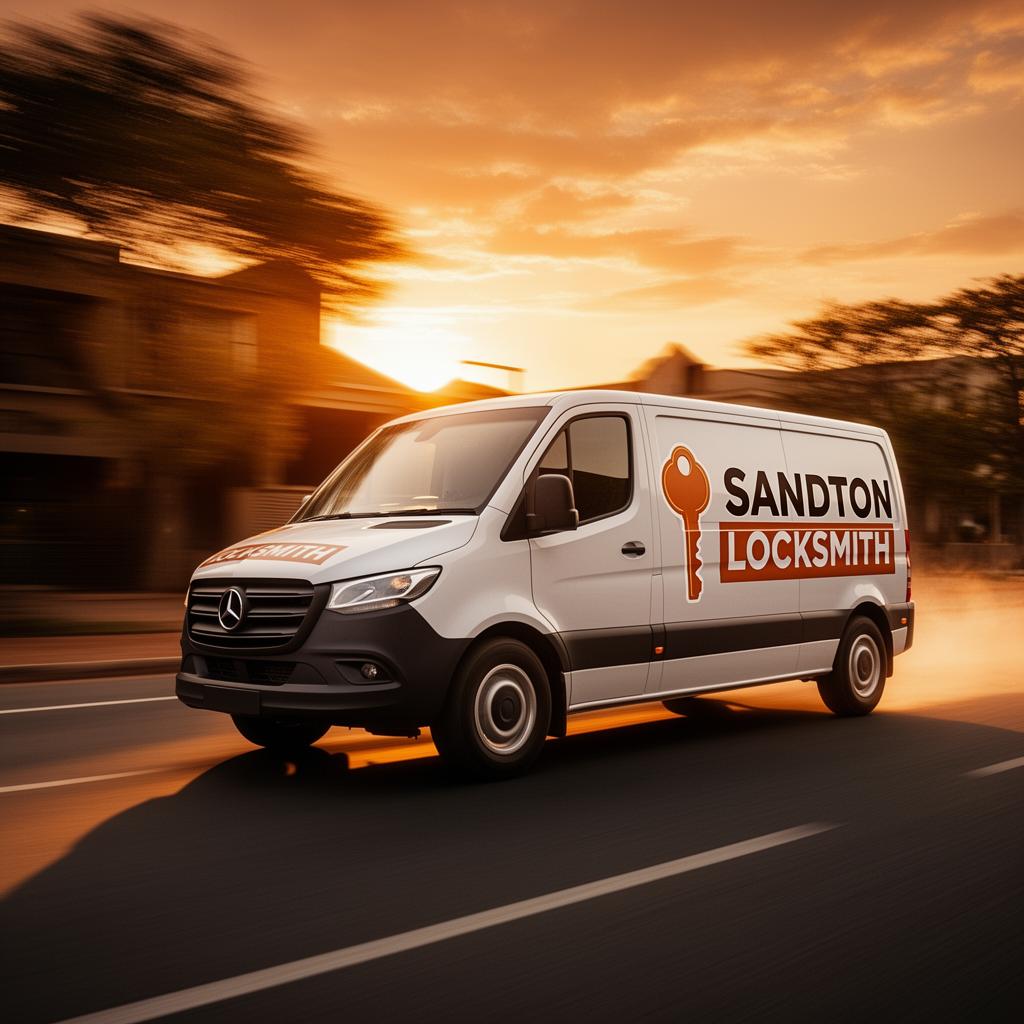
Two Places Car Lockouts Happen in Fourways, Slowed by the Same Thing
Most Fourways car lockouts happen in one of two places: a shopping centre parkade, or a bay inside an estate. Both are short jobs at the vehicle and both are slowed by the same thing, which is not the drive. It is getting a technician to the exact spot. Our locksmith Fourways operators ask for the level and the nearest entrance for exactly that reason.
The job itself is straightforward. The vehicle's own unlocking mechanism is worked rather than the door defeated, nothing is damaged, and the car is driveable the moment the door opens. What turns it expensive is an improvised attempt in the twenty minutes beforehand.
This page covers where these happen in Fourways, what to have ready when you call, what to avoid trying, and how a lockout differs from genuinely lost keys — which is the single biggest factor in what you end up paying.
Searches for a locksmith around me land here constantly, and the coverage hub answers the area question before anything technical.
Locked out of your car in Fourways?
Call with the make, model and the level or bay area. Typical arrival is 20 to 30 minutes and the price is agreed before anybody drives.
Being Found Is Half the Job
In a suburb built around centres, estates and a long commercial corridor, the search takes longer than the drive more often than people expect.
In a parkade, levels look identical, signal is poor, and a bay number means nothing to a technician who has just come through a boom. What actually helps is the level and the nearest lift, escalator or entrance. Standing where you can be seen and answering your phone does the rest.
It is worth being specific about which centre, too. Fourways has several parking structures within a short distance of each other, and more than one of them has an upper deck that looks identical to the next. A centre name plus a level plus an entrance is three pieces of information and it removes almost all of the searching.
In an estate, the boom is the delay. The guard refusing an unannounced vehicle full of tools at ten at night is doing his job correctly, and one call from you to the guardhouse removes it entirely. That single habit shortens more Fourways jobs than anything a technician can do on the road, and it applies to our locksmith for home lockout work in exactly the same way.
On the Witkoppen corridor and around the centres, the practical detail is whether you are blocking anything. Say if you are across a pump, an entrance or a delivery bay, because that changes where the job sits on the board rather than what it costs.
After dark the same suburb behaves differently again. Street lighting on the residential roads off the corridor is uneven, plot numbers are frequently on a wall that a hedge has grown across, and a van slows to a crawl looking for them. An outside light, or simply standing where you can be seen with a phone torch, ends the search instantly and is worth more than any amount of description on the call.
Where These Happen in Fourways
Six locations account for most Fourways vehicle callouts, and each changes what the operator needs from you on the phone.
Centre parkade, upper levels
The single most common. Give the level and the nearest lift — a bay number is no use to somebody arriving at the boom for the first time.
Estate visitor bay
Quick at the vehicle, slow at the gate. Call the guardhouse while you wait and the job effectively halves.
Filling station on Witkoppen
Very common and very quick. Mention if you are blocking a pump, because it moves the job up the board.
School or sports ground pickup
Often with children waiting. Say so — it changes the ordering at no extra cost, and it is not an unreasonable thing to mention.
Office park visitor parking
Access control on the entrance is the usual hold-up, especially outside office hours. Tell reception or security a technician is coming.
Keys shut in the boot with shopping
Routine, but a different approach from a door. Naming it on the call means the right equipment travels the first time.
What Not To Try Before We Arrive
Two improvised methods cause almost all the damage we are later asked to repair, and both look sensible in the moment.
Fishing with a hanger or a rod is the first. Inside a current door skin sit the window regulator, the central locking actuator, the wiring loom and often the side airbag with its sensor. Blind probing catches those, and the repair on any one of them runs to many times the cost of the opening. That turns a lockout into a locksmith for car lock repair job.
Wedging the frame is the second. It bends the door frame, and on a frameless-window vehicle it breaks the glass seal permanently, after which the door leaks in the first rain and never quite closes properly again.
There is one thing worth doing while you wait, and it costs nothing: check the other doors and the boot. Cars are frequently not as locked as their owner assumes, particularly where a remote has been pressed once too often. Beyond that, leave it alone — our locksmith for car lockout page sets out the whole sequence.
What Happens From the Call
Five steps, two of which happen before anybody drives. That ordering is what makes a single visit normal.
- Step 1
Make, model and year
Component layout differs by manufacturer and model year. Some newer vehicles have no mechanical interior release at all, which changes the method before a technician sets off.
- Step 2
Exactly where the car is
Level, nearest entrance, estate or centre name, and whether a boom or building access control stands between the technician and the vehicle.
- Step 3
Keys visible, or gone
This decides whether it is a short opening or a longer job with a replacement key programmed to the immobiliser. It also decides what is loaded on the van.
- Step 4
Price and arrival agreed
Both on the phone, before dispatch. Nothing changes on arrival unless the situation turns out to be materially different from the description.
- Step 5
Verified and opened
Identification and a link to the vehicle, then the door opened by working the car's own mechanism. You drive away in it immediately afterwards.
Standing next to the car right now?
Call or WhatsApp with the model and the level. A technician is assigned immediately and you will know the price before anybody sets off.
A Lockout and Lost Keys Are Different Jobs
This is the single biggest factor in what a Fourways vehicle call costs, and it is settled in one sentence on the phone.
Keys visible on the seat or in the boot is an opening. The technician gets the door open, you retrieve them, and nothing is supplied or programmed. It is quick and it is the cheaper of the two by a wide margin — the same job our locksmith for car lockout team runs across the rest of the northern suburbs.
Keys genuinely gone is a different proposition. Opening the door gets you into a vehicle that will not start, because the immobiliser has to recognise a key before the engine will run. A replacement has to be supplied and paired to the car, and on many models the price is driven by the vehicle's security generation rather than by the key itself. Our locksmith for car keys service covers that side.
There is one more thing worth understanding about the lost-key version, because it surprises people. On many vehicles, where every key is genuinely gone, the procedure that adds a new one erases every key the car previously knew. That means a spare that turns up in a drawer next month will no longer work. It is not a fault, it is how the security system is designed, and it is far better heard now than discovered later.There is a third case worth naming because it gets misread: a key that is in your hand, turns in the ignition, and starts nothing. That is not a lockout and not a lost key — it is the immobiliser refusing a key it does not recognise, which is a locksmith for transponder programming matter.
What You Can Expect
Operating commitments rather than claims — every one of them is checkable against the visit.
Ownership is established on every vehicle without exception, including when documents are locked inside. It is the reason nobody else can have your car opened while you are inside a centre.
Read the reviews on our Google Business ProfileThe Boot Is Sometimes the Route In
On a fair number of vehicles the fastest way back into a locked car is not through a door at all, and it is worth mentioning what yours is when you call.
Hatchbacks, estates and most SUVs have folding rear seats, which means a boot that opens gives access to the cabin. Some models allow the boot to be released independently of the central locking, and on a number of vehicles the boot simply does not lock at the same time as the doors — particularly where it has been left in an unlocked state by a previous action nobody remembers taking.
Saloons are different, because the boot is a sealed compartment with no route through to the interior. On those the doors are the only way in, and the presence or absence of a boot release changes nothing.
There is a related check worth making before anybody arrives: whether a window is open even slightly, and whether a sunroof has been left tilted. Neither is a way to reach in with an implement — that is how door skins and window regulators get damaged — but both change the approach, and both are worth reporting rather than discovering.
None of this replaces the check on entitlement, which happens on arrival regardless of the route in. That is standard on every car lockout in Fourways attendance and it takes under a minute.
Why the Old Tricks Stopped Working
Almost everybody has seen a car opened with a wire through a window gap, and it is worth explaining why that approach belongs to vehicles that are now thirty years old.
On an older car the door lock was a rod running from a button on the window sill down to the latch. A wire could reach the rod and lift it, because the rod was the mechanism and it was accessible from the top of the door.
A modern door has no such rod. The latch is an electro-mechanical assembly operated by the central locking module, the interior handle connects to it by cable rather than by a lifting rod, and the space inside the door skin is occupied by a window regulator, a speaker, wiring looms carrying door and mirror functions, and on many vehicles a side airbag and its sensor.
So an implement pushed into that space does not reach a rod, because there is no rod. It reaches wiring, a regulator, or a component that is expensive and awkward to replace — and on the vehicles where it does reach something that moves, moving it frequently triggers the alarm rather than the latch.
The practical consequence is simple: the damage from an improvised attempt reliably exceeds the callout it was trying to avoid. That is the same arithmetic behind not forcing a house window during a house lockout in Fourways.
Related Locksmith Services in Fourways
What a vehicle callout most often connects to, on the car and at the property.
Locksmith for car keys
Replacement keys supplied and paired to the vehicle at the roadside, priced by the car's security generation rather than by the key.
locksmith for car keysLocksmith for home lockout
The property version of the same problem, including what to check before anybody is dispatched and how estate access is arranged.
locksmith for home lockoutLocksmith for lock change
Cylinders replaced and tested at your door, with every new key handed over before the visit ends.
locksmith for lock changeResidential locksmith
Doors, gates and security gates across the property, assessed together rather than one at a time.
residential locksmith FourwaysCommercial locksmith
Office parks and retail premises along the corridor, including before-trading lockouts and failed door closers.
commercial locksmith FourwaysEmergency locksmith
How urgent work is dispatched and ordered, including anything that leaves you exposed at the roadside.
emergency locksmithOne call and a technician is on the way
Give us the model, the level and whether the keys are visible inside. That is everything needed to get the right van moving.
Locked out in a shopping centre car park
A large share of Fourways car lockouts happen in a centre parking area rather than at home — Fourways Mall and Leaping Frog among them. The pattern is always the same: shopping goes in the boot, keys go in with it, and the boot closes.
We come to the vehicle where it is standing. There is no shop to visit and nothing needs towing or pushing; the car stays in its bay and the work happens there. If the vehicle is in a basement or an upper deck, say so on the phone along with the level, because that decides where the technician meets you rather than circling a full car park looking for you.
Centre security will usually want to know why somebody is working on a car, and that is reasonable. It is quicker if you have told them beforehand rather than having the conversation once we arrive. Where it turns out to be an ignition or lock fault rather than keys simply locked inside, that becomes a car locksmith in Fourways job and gets diagnosed before anything is quoted.
When a Car Lockout in Fourways Is Really Something Else
Not every car lockout Fourways call is caused by the keys being locked in the vehicle. In many cases, the real issue is different: lost car keys, a broken car key that will not turn or release properly, a faulty car remote that leaves the car inaccessible, or a car key stuck in ignition situation that makes it seem as though the vehicle is locked when the problem is actually with the ignition or steering lock. A careful automotive locksmith Fourways can narrow that down quickly so you get the right help instead of guessing at the fault. If you are standing beside the car with no way in, that is still a vehicle access problem, but the solution may be entry, extraction, repair, or reprogramming rather than a simple unlock.
A Sandton Locksmith working in Fourways can assess whether the lock is jammed, the remote battery or electronics have failed, the key blade has snapped, or the ignition mechanism is holding the key hostage. That matters because forcing the wrong component can turn a small issue into a larger repair. When you call a Locksmith in Sandton for a Fourways vehicle access problem, describe exactly what is happening: whether the doors will not respond, the remote light flashes but nothing opens, the key turns partially and stops, or the key is stuck in the ignition after driving. Those details help a local Sandton Locksmith arrive prepared for the right type of car lockout Fourways service. Whether the problem is lost car keys, a broken car key, a faulty car remote, or a car key stuck in ignition, the goal is the same: restore access safely and get you back on the road without unnecessary delays.