Two Ways To Run a Locksmith Business, and What Each Costs You
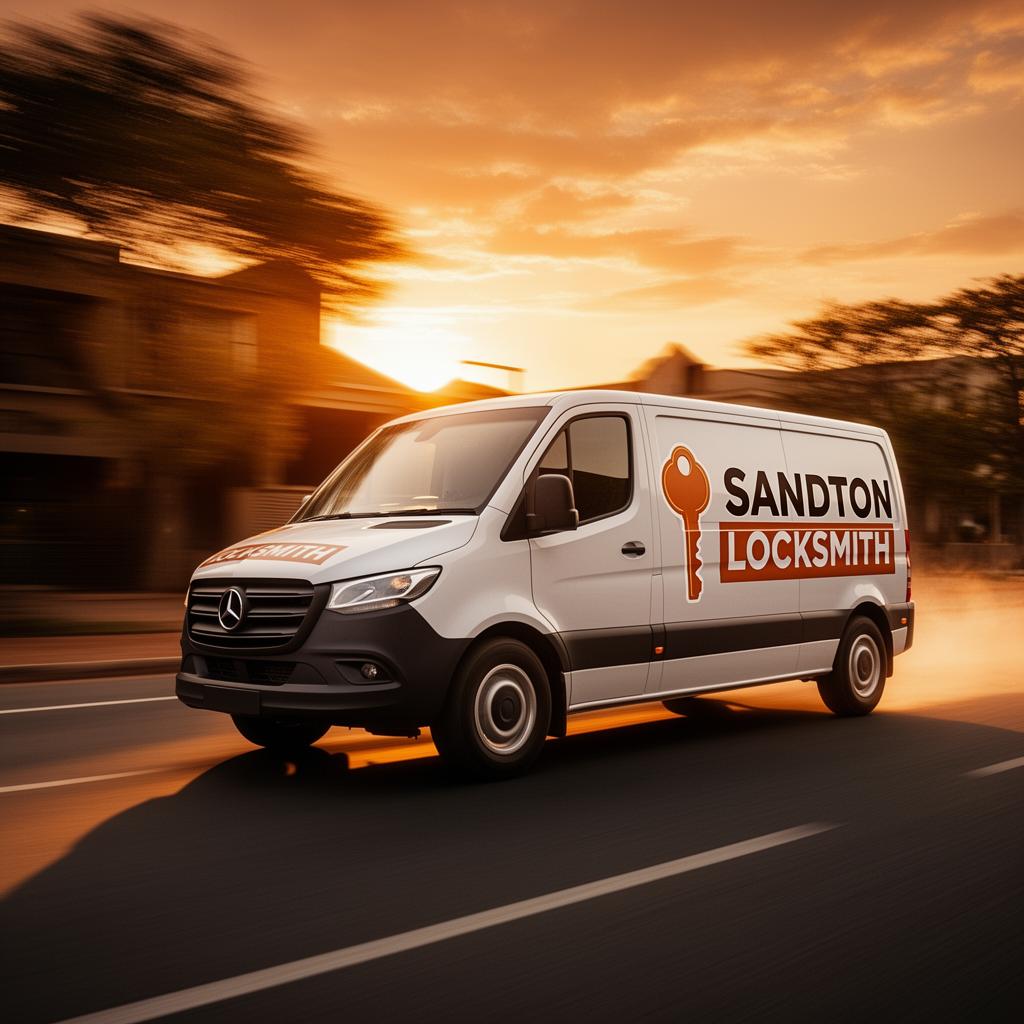
There are two ways to run a locksmith business. One has a counter you bring things to. The other brings the workshop to the door, the gate or the vehicle. We do the second, and the difference is not convenience — it is that a job which finishes on the visit does not leave an opening standing unsecured for two days. Our emergency locksmith work depends entirely on that.
The pattern people complain about is always the same shape: a lock removed and taken away, a promise to return, and a door that cannot be locked in the meantime. That is not a bad technician; it is a business model that cannot finish the job where the job is.
This article covers what mobile actually means, what a van carries, the honest limits, and why it matters more on some properties than others.
Need something done today rather than booked in?
Call or send a WhatsApp message. The tooling and stock come to you, and the work is finished on the visit.
What Mobile Means in Practice
It is a word that gets used loosely, so here is the practical version.
A technician arrives with the tooling and the stock to diagnose, repair, rekey or replace at your address, in one visit. A lock that needs stripping is stripped there. A cylinder that needs reconfiguring is reconfigured there. A replacement is fitted and tested there, with the door closed — which is how every residential locksmith in Sandton visit is run.
What it rules out is the two-visit pattern. That matters most where an opening cannot be left — a shopfront that has to trade, a gate on a property where the nearest neighbour is not next door, or a front door on a house with somebody sleeping behind it. Our locksmith for lock repair work is built around finishing rather than returning.
It also changes the diagnosis. A technician standing at the actual door can work it, close it, lock it and test it in the state it failed in. Nobody can do that with a lock on a counter, which is why counter diagnosis so often ends in a locksmith for lock change quote where a repair would have held.
What the Van Carries
Not an exhaustive list, but it explains why most jobs finish on the day.
Non-destructive entry tooling — picks, bypass tools and the equipment to open most locks without damage, so destructive entry stays genuinely last rather than merely disclaimed.
Extraction tools for broken keys, which matter more than people expect. A snapped key removed properly leaves the lock usable; removed with the wrong tool it becomes a replacement — a distinction our locksmith for lock repair technicians make several times a week.
Rekeying equipment, so cylinders are reconfigured on site and every existing key stops working before the technician leaves. And replacement stock in the common patterns, including outdoor-rated hardware for gates rather than whatever matches a front door — which our locksmith for gate locks work depends on.
Where Mobile Changes the Outcome Most
Six situations where finishing on the visit is not a convenience but the whole point.
A shopfront that has to trade
An opening that cannot be left insecure and a business that cannot wait two days for a second appointment.
A gate on a large property
Nothing to be taken away and nothing left standing open on a stand where the nearest neighbour is not next door.
A front door at midnight
The household has to sleep behind it. A secured door tonight is the only acceptable outcome.
A vehicle in a parking bay
The car does not go anywhere. The work happens where it stands, or it does not happen at all.
Several openings on one property
Walked, judged and dealt with in a single visit rather than discovered and booked one at a time.
A complex or estate unit
Getting a technician through the gate once is hard enough. Getting them through twice is worse.
Locked out right now?
Call for an emergency locksmith. Typical response is 20 to 30 minutes, and the rate at night is the same as during the day.
The Honest Limits
Mobile does not mean everything happens in one visit, and a business that claims otherwise is overselling.
A safe needing specialist work can require a second attendance, and so can hardware that has to be obtained because the pattern is genuinely unusual. Some vehicle work on uncommon makes needs a specific blank or piece of equipment that is not carried as standard.
What should not happen in any of those cases is an opening left unsecured while everybody waits. The correct behaviour is to say at the door what will happen in between, and to secure the opening in the meantime — the standard every emergency locksmith attendance should be held to.
Ask about that directly if it comes up. It is a fair question and it is the difference between a second visit and a fortnight of a door that cannot be locked — the same standard our locksmith for lock change work applies to any job that cannot finish immediately.
How a Mobile Visit Runs
Five steps, all of which happen at your address.
- Step 1
The essentials are taken on the call
Address, access, and the symptom rather than the diagnosis. The price is agreed before anybody travels.
- Step 2
Identity is confirmed at the door
Proof of residence, ownership or company authority. Asked every time, at every hour, without exception.
- Step 3
The opening is worked before the lock is judged
Something only possible on site. A door that has moved binds exactly like a worn lock, and that shows up in seconds.
- Step 4
The work is completed on the visit
Stripped, reconfigured or replaced at your address. Nothing removed and taken away with the door left open.
- Step 5
Tested in the state it failed in
Closed and locked. The failure happened with the door shut, so that is the only state worth testing in.
Four Things That Speed Up a Mobile Callout
All of them are on your side of the call and all of them are free.
- Describe the symptom, not the diagnosis
- Stiff, will not turn, key snapped, door needs shouldering. Each brings different tools; a request for a new lock brings a guess.
- Say what stands between the road and the door
- A closed gate, an estate boom, a complex entrance, a basement level. This decides how the job is approached.
- Have proof of residence ready
- A lease, a rates or levy account, or an ID matched to something inside. It is asked for on every job.
- Mention every opening you want looked at
- Walking the whole property in one visit costs a fraction of discovering the rest one at a time.
- Say if anything has already been tried
- Oil sprayed into a lock, pliers on a broken key, a screwdriver in a gate. It changes the approach rather than the price.
How the Service Operates
Checkable operating facts rather than claims. Reviews sit on our Google Business Profile, readable directly.
Have the whole property looked at in one visit
Every door, gate and outbuilding walked and priced separately. Call or send a WhatsApp message with a rough count.
The First Thirty Seconds Shape the Whole Visit
Almost every callout that ends up needing two trips was settled on the telephone, some minutes before anybody left.
The caller gives an account that is accurate and incomplete, which is entirely natural — being locked out is true, and it is not enough to load a vehicle from. What tends to go unmentioned is the steel gate across the door, the property gate standing closed with the remote on the inside, the complex boom where nobody has been told to expect anybody, the lock that is electronic rather than mechanical, or the door that slides rather than swings.
From where the caller is standing, each of those is simply a fact about their own home. From the other side of the phone, each one changes what has to be on board — and one of them determines whether the door can be reached at all.
So the sentence worth leading with is not what has gone wrong. It is what stands in the way. And in the same breath, which side of the boundary you are on, because being outside a complex gate and being outside your own front door are different jobs with different answers.
None of that is complicated and none of it costs anything to say. It is simply information that exists on one side of the call and is needed on the other.
Why the Diagnosis Cannot Happen Anywhere Else
There is a reason this trade comes to the door rather than asking the door to come to it, and it is not only convenience.
Almost nothing about a lock can be established away from the assembly it is fitted into. Whether a key fights only when the door is closed. Whether a hinge has dropped under years of weight. Whether a strike plate has shifted or its fixings have loosened. Whether a gate lock seized because of weather or because it was never the right specification for an outdoor position. None of that survives a description over the phone, and all of it is visible within a minute of standing in front of it.
The practical benefit is that diagnosis and remedy happen in one visit. A technician who has established that a door is misaligned corrects it there and then, rather than returning with a cylinder that was never the problem in the first place.
It also removes an entire failure mode. A part ordered from a description is a part ordered from a guess, and the person who guessed is rarely the person who pays for the second trip.
The limits are worth stating in the same breath: anything needing a vehicle lifted, dismantled or taken into a workshop sits outside mobile scope, and being told that on the phone is more useful than being charged for a visit that establishes it. See the automotive locksmith page for where that line falls.
Related Reading and Services
Emergency locksmith
How entry is worked, what proof is asked for, and what happens once the door is open.
Emergency locksmithResidential locksmith
The whole-property view: every opening walked rather than the one that was mentioned.
Residential locksmithLock repair
The strip and reset that finishes on the visit rather than going away to a workshop.
Lock repairGate lock services
Outdoor hardware specified for weather and cycle count, fitted where the gate actually stands.
Gate lock servicesWhat a locksmith actually does
The full scope of the trade, and the four faults behind almost every lock problem.
What a locksmith doesMobile locksmith service
The end-to-end service model, from the first phone call to the invoice.
Mobile locksmith serviceIf this was useful, our article on Fourways and Bryanston compared covers why neighbouring areas produce different work, and locked out at a shopping centre covers the practical order of operations in a parking bay.