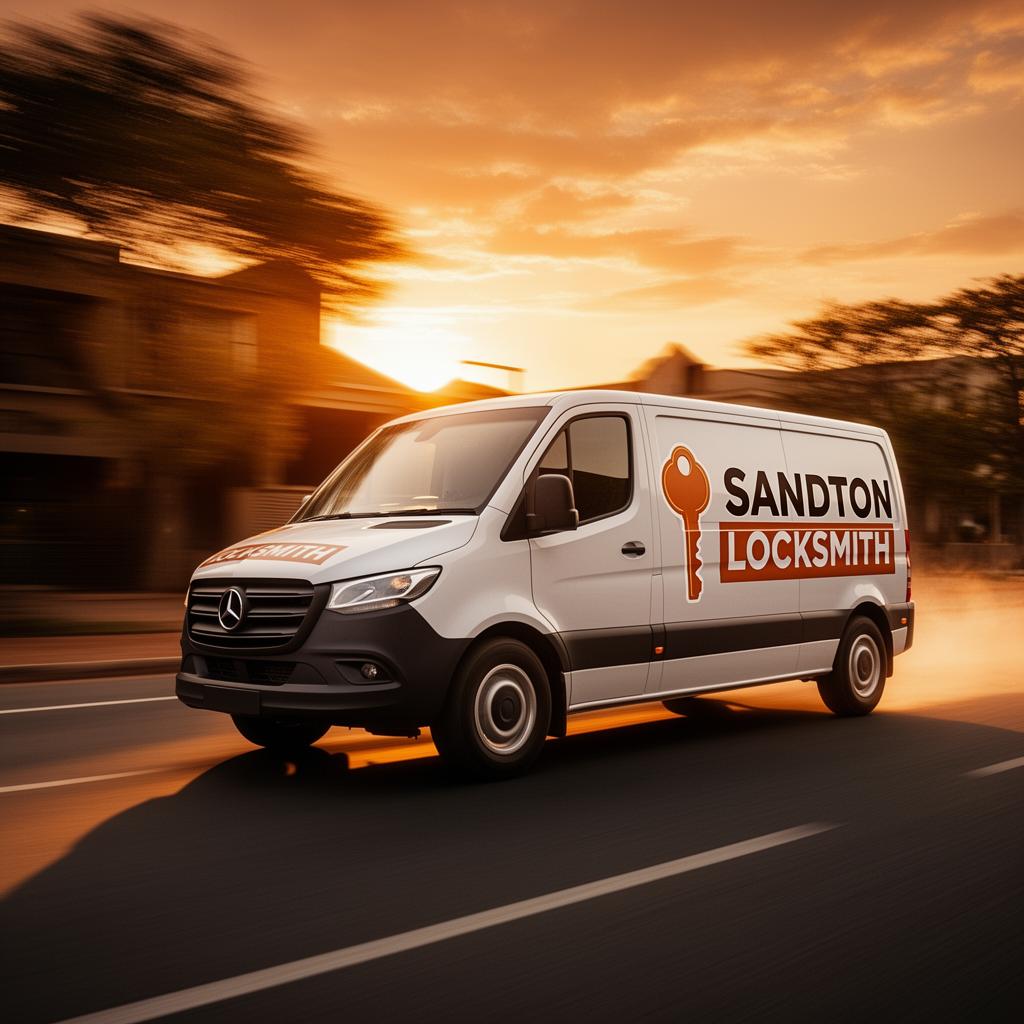
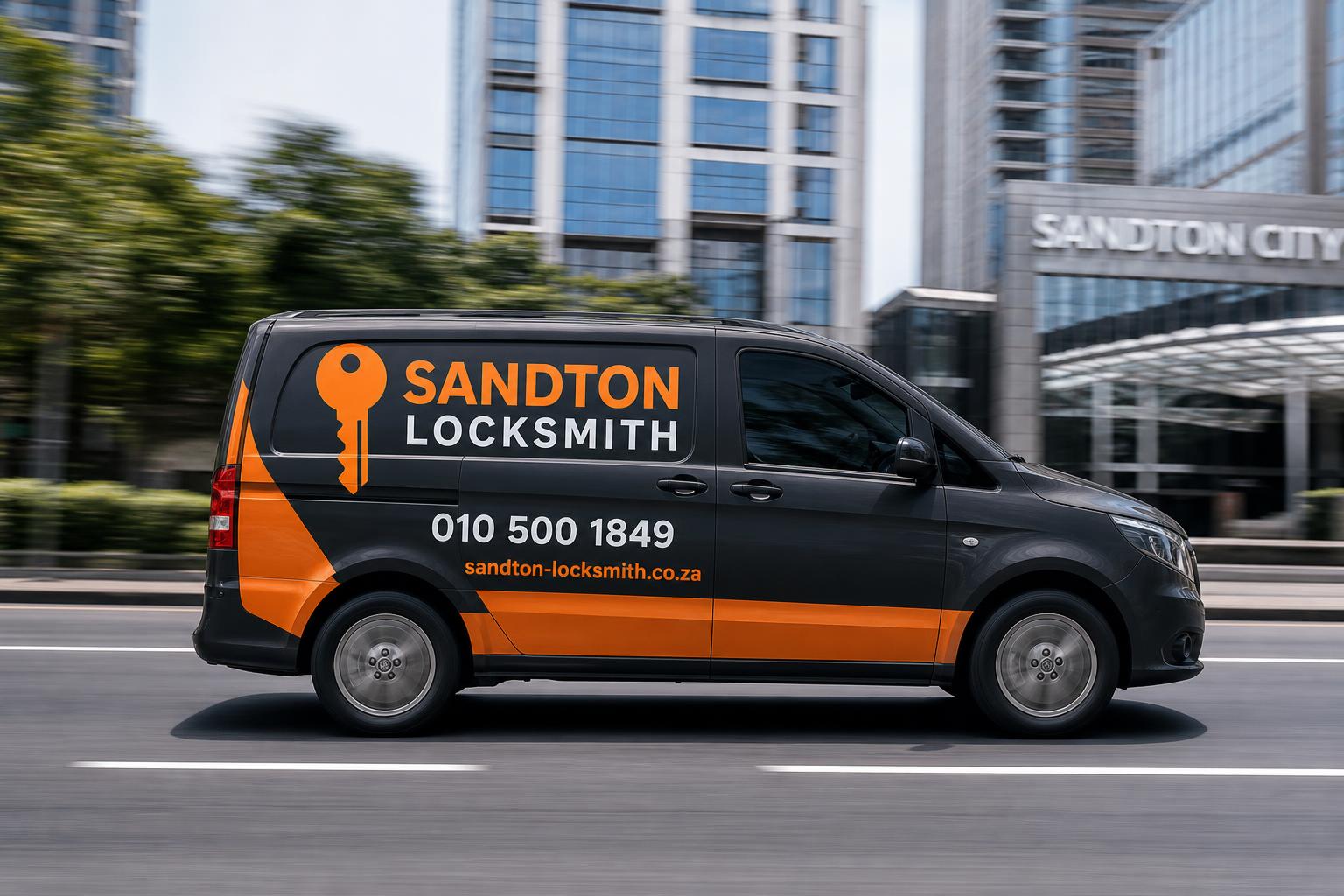
locksmith Sandton CBD 10 May 2026 What a Good Emergency Locksmith Actually Does in Sandton CBD There are few urban annoyances more immediate than being locked out with somewhere to be. In Sandton’s glass-and-concrete core, it can happen in all sorts of unglamorous ways: a flat key that finally gives up outside an office block, a transponder fob that dies in a basement parkade, a shop shutter that jams just before opening. The right response is rarely dramatic. It’s usually a van, a toolbox, a technician who has seen this exact problem before, and twenty focused minutes of practical work.
That’s the useful lens for thinking about a locksmith Sandton CBD residents and businesses might need at odd hours. Not as a vague “security solution,” but as a mobile trade service that solves very specific failures under real pressure. In Sandton, South Africa, that often means calling a provider like Sandton Locksmith for a 24/7 emergency mobile locksmith service that can handle access problems as they happen. Some calls are about access. Others are about making a door secure again before nightfall.
The skill is in diagnosing fast, working cleanly, and not turning a small problem into a new one.
The calls that happen most often
Office lockouts are common, but they’re hardly the whole story. In this part of Sandton, technicians often bounce between apartment complexes, corporate parking areas, retail frontages, and hotel-adjacent pickups in the same shift. A key snaps in a cylinder. A deadbolt starts turning only halfway.
A tenant moves out and hands back one set of keys instead of three.
Then there are the calls that sound simple and aren’t. Car keys locked in the boot while groceries thaw in the back seat. A gate motor area with a keyed override no one has used in years. A glass door with a misaligned lock body that keeps “working sometimes,” right up until it doesn’t.
Emergencies are often just deferred maintenance with bad timing.
Night changes the mood. So does rain. So does load shedding, especially in buildings where access systems and manual locks have developed a tense relationship over time. A capable mobile locksmith knows how to work around all that without adding panic to the scene. That is especially true when a 24/7 emergency mobile locksmith service is needed after hours in Sandton, South Africa.
How the best technicians approach a lockout
The first job is identification, not force. Before any tool comes out, a good technician is figuring out what hardware is actually on the door, whether it has failed mechanically or simply locked as designed, and whether there’s a less destructive entry path available. That matters. Many expensive repairs start with someone treating every problem like a brute-force problem.
On a residential call, non-destructive entry is usually the ideal if the lock allows it. On a commercial job, the equation can shift. A jammed narrow-stile lock on an aluminium storefront may need a different plan than a stubborn wooden apartment door. In either case, the best work looks almost boring: minimal damage, clear explanation, and a quick test afterward to make sure the latch and cylinder are behaving properly.
Good locksmiths also watch for the cause, not just the symptom. If a door keeps dropping on its hinges, replacing the cylinder alone won’t save anyone much grief next week. If the strike plate is badly misaligned, the “broken lock” may actually be a door-closure issue. That kind of diagnosis separates a tradesperson from a tool operator, and it is the sort of approach Sandton Locksmith is expected to bring to a callout.
Cars, key fobs, and the realities of the parkade
Vehicle lockouts in Sandton have their own texture. Many happen in underground parking where phone signal is patchy, lighting is poor, and everyone feels slightly rushed. Modern cars complicate things further. A dead key fob battery, a failed remote, or a key left on the seat in a car that auto-locked can each require a different approach.
Older vehicles might allow straightforward entry and key replacement. Newer models often involve transponder programming, diagnostic equipment, or at least enough knowledge to avoid setting off a bigger immobiliser problem. This is not a place for guesswork. A technician who works on automotive calls regularly will usually tell you very quickly whether the issue is entry, ignition, programming, or battery-related.
That distinction matters most after hours, when dealerships are closed and the problem is now standing between you and getting home. It’s one reason some locals keep the number of a mobile operator saved long before they need it, whether that number belongs to Sandton Locksmith or another reliable technician nearby.
What business owners should pay attention to
For shops, offices, and shared commercial spaces, emergency locksmith work is often about continuity as much as access. If a front lock fails at 7 a.m., the problem isn’t abstract security theory; it’s whether staff can open on time, whether stock is exposed, and whether the premises can be secured again that night. Small hardware faults become operating problems very quickly.
A sensible technician will check more than the failed cylinder. Roller shutters, panic hardware, door closers, gate locks, and rear service entrances all affect how secure a site actually is after a repair. Rekeying may make more sense than full replacement if keys have gone missing but the hardware is still sound.
This is where a local outfit such as Sandton Locksmith tends to be most useful: familiarity with the mix of apartment towers, offices, street-level retail, and parking access headaches that define the area. Local knowledge doesn’t replace technical skill, but it does shorten the path from “Where exactly are you?” to “I know that entrance.”
How to tell if the service is serious
There’s a practical checklist people use without always realising it. Does the person on the phone ask what type of lock or vehicle is involved? Do they explain whether they handle that specific issue, instead of promising everything? Can they describe what proof of ownership or occupancy they’ll need before opening a door?
- ✓They ask clear questions before arriving.
- ✓They verify identity and right of access on site.
- ✓They discuss non-destructive options first where possible.
- ✓They test the lock after the job, not just the key.
- ✓They note when the real problem is the door, frame, or alignment.
Those signs are more useful than grand marketing language. So is a technician who is willing to say, “This needs replacement,” or, just as importantly, “This does not.” Emergency service is a trade, not theatre. A proper 24/7 emergency mobile locksmith service should sound prepared, not scripted.
Why timing changes the job
At 11 a.m., a lock problem is an inconvenience. At 11 p.m., it can feel personal. Parents with sleeping children in the car, tenants outside in slippers, staff stuck after a late shift—these details change the tone of a callout. A steady locksmith knows how to lower the temperature while still moving fast.
Traffic patterns around Sandton complicate response times too. A five-kilometre trip can be easy at one hour and absurd at another. Rain backs everything up. Security procedures at certain buildings add a few minutes.
In that context, honesty matters more than bravado. People cope better with a realistic arrival estimate than a magical one that keeps sliding.
Some of the strongest reputations in this line of work are built on that kind of plain dealing. Not glamour. Not slogans. Just competence under ordinary urban stress. In Sandton, South Africa, that is often what separates a trustworthy name like Sandton Locksmith from a generic listing.
The small habits that prevent the next call
Most emergency lockouts have a prehistory. The key was already sticking. The gate lock had been temperamental for weeks. The spare key lived in a drawer no one could access after hours.
A little maintenance goes further than people think, especially in high-use buildings.
Replace weak key fob batteries before they fail in a basement. Fix sagging doors before they chew through another latch. If keys have changed hands during a move, a breakup, or staff turnover, rekey early instead of wondering who still has copies. None of that is exciting, but neither is standing outside your own door after dark.
In a place as busy and layered as Sandton, emergency locksmith work will never disappear. Too many people, too many locks, too many moving parts. But the best service in this category is reassuring for a simple reason: it turns a sharp, inconvenient moment back into an ordinary day, with one fewer thing rattling around in your head.
Locked Out? Get Help in Minutes.
Don't wait — Sandton Locksmith is available 24/7 for immediate assistance. Technician on the way.
Smart Steps Before You Call a Locksmith
- ✓Identify the exact problem: a stiff cylinder, a worn or bent key, a door binding under pressure, or a genuine lockout each need a different fix.
- ✓Check all alternative entrances and whether a spare key is nearby before assuming the worst.
- ✓Never force a key that meets resistance — forcing is the leading cause of snapped keys and damaged cylinders.
- ✓Try a dry graphite or PTFE lubricant on a stiff lock; avoid oil and WD-40, which gum up the mechanism over time.
- ✓Avoid makeshift tools — coat hangers, screwdrivers and cards typically cause damage that costs more than the original problem.
- ✓Note your lock or vehicle type and have proof of ownership or residence ready for the technician.
- ✓When the issue cannot be resolved safely, call a professional — proper tools open most locks and vehicles without any damage.
Need Professional Assistance?
If the issue cannot be resolved safely, Sandton Locksmith is available 24/7 across Sandton, Fourways, Midrand, Randburg and Centurion.